

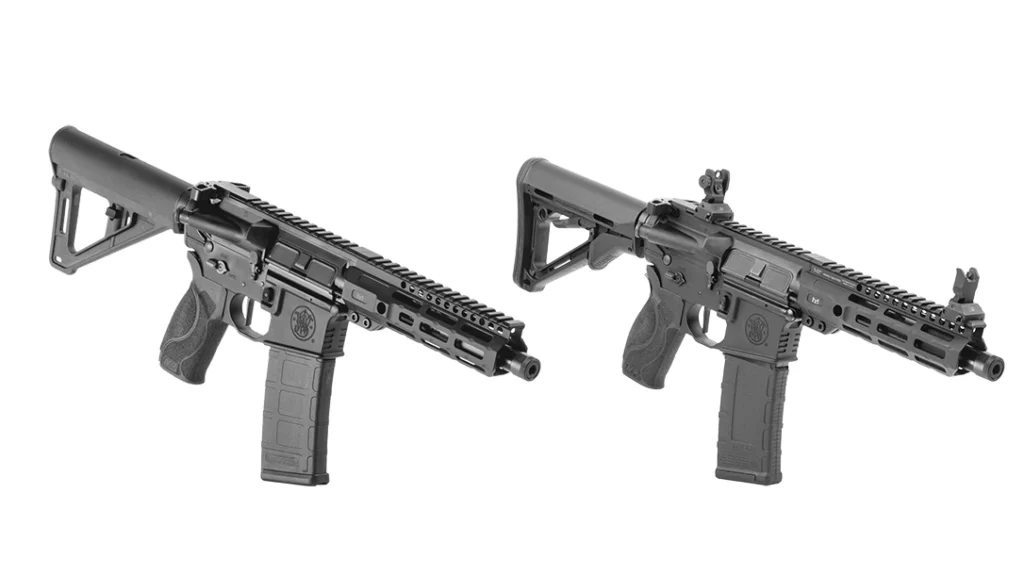
Smith & Wesson’s decision to launch a purpose-built .300 Blackout pistol and SBR in the M&P15 AXE line signals that the company is no longer treating suppressors as an afterthought. By engineering the platform around the realities of subsonic ammo and sound moderation from the ground up, S&W is acknowledging that today’s serious shooter expects a compact, quiet, and reliable package rather than a standard carbine with a threaded muzzle. The move also underscores how .300 Blackout has matured from a niche round into the dominant choice for short-barreled, suppressed work, giving the 2A community a factory option that sidesteps the custom-gunsmith route many previously had to take.
For the broader firearms community, this release is another data point in the industry’s shift toward suppressor-friendly design as a baseline feature rather than a costly upgrade. It reflects both regulatory tailwinds—more states easing suppressor ownership—and consumer demand that has turned the once-fringe accessory into a mainstream expectation. By offering both pistol and SBR configurations, Smith & Wesson is effectively giving buyers a turnkey path into the NFA world while simultaneously reinforcing that the right to keep and bear arms includes the right to do so quietly and responsibly.
The larger implication is that mainstream manufacturers are now competing on how well they integrate emerging technology and legal realities rather than simply iterating on existing AR patterns. That competition benefits every law-abiding gun owner by driving down prices, improving quality, and normalizing the idea that a well-equipped defensive or sporting rifle can—and should—be suppressed. In an era when anti-2A voices continue to push restrictions, products like the M&P15 AXE .300 Blackout variants serve as tangible proof that innovation and responsible ownership are advancing together.


