

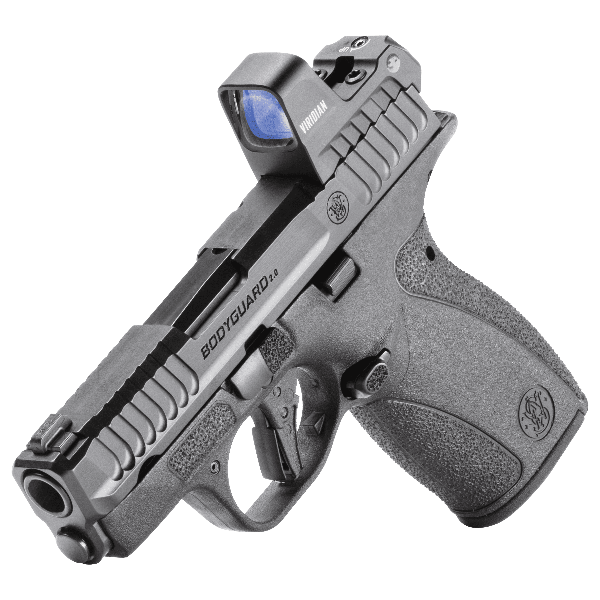
Smith & Wesson’s decision to factory-mount the Viridian RFX1 green-dot on the Bodyguard 2.0 isn’t just a convenience upgrade—it’s a quiet admission that the micro-.380 category has finally outgrown its “last-ditch backup” reputation. At twelve ounces with an optic already zeroed and tritium front-sight backup, the package collapses the traditional three-step process (buy gun, buy optic, pay a gunsmith) into one SKU that law-abiding carriers can actually pocket-carry without extra tooling or downtime. Viridian’s INSTANT-ON activation means the dot wakes with the draw, removing one more variable when seconds matter, while the optic’s compact footprint keeps the already svelte slide profile intact—important when every millimeter counts against printing under a T-shirt.
For the 2A community this release signals two converging trends: optics are no longer the exclusive domain of duty-size pistols, and manufacturers are listening to the everyday carrier who wants a defensive tool that arrives range-ready rather than bench-ready. The Bodyguard 2.0’s ergonomic refresh plus the RFX1 combo lowers the barrier for new shooters who might otherwise balk at milling slides or learning iron-sight transitions under stress. In practical terms, that means more lawfully armed citizens are statistically likelier to carry daily because the gun is lighter, the sight picture is faster, and the entire system ships legally compliant in all fifty states.
Critics who still dismiss .380s as under-powered will miss the larger point: this isn’t about ballistics debates; it’s about access. By delivering a micro-pistol that’s optics-ready out of the box, Smith & Wesson and Viridian are expanding the pool of people who can confidently exercise their right to bear arms without needing a gunsmith’s bench or an FFL’s extra transfer. That’s the real headline—one the industry will likely follow rather than lead.


