

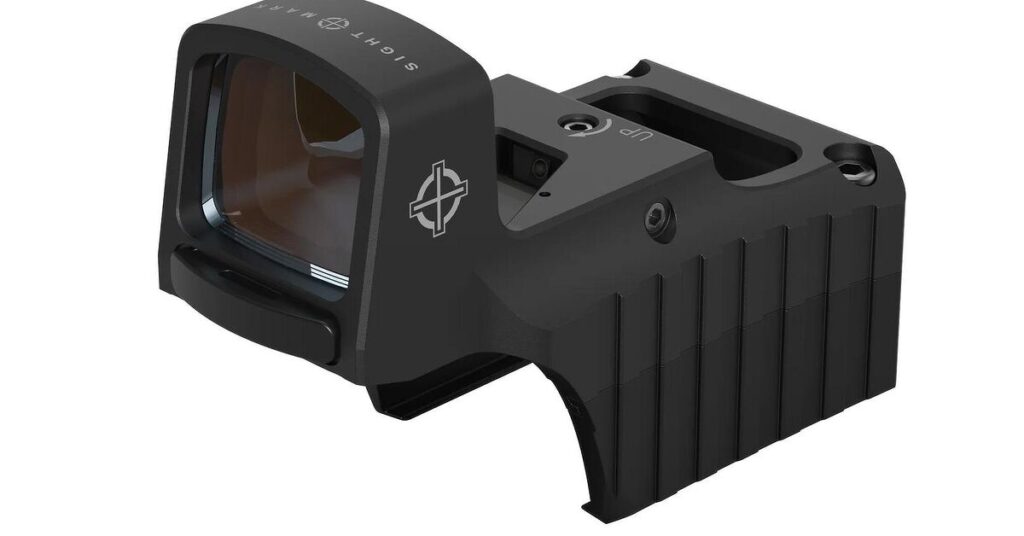
Sightmark’s G-Shot is the first optic that truly respects the Glock platform’s original design instead of demanding the owner carve it up. By mating directly to the factory slide of Gen 3–5 G17s, G19s, and G26s, the G-Shot eliminates the need for milling, plates, or aftermarket slides—removing both the cost and the irreversible alteration that has long been the price of entry into the red-dot world. For the millions of Glock owners who treat their pistols as tools rather than canvases, this is a meaningful shift: the gun stays stock, the optic is removable, and resale value remains intact.
That matters because the 2A community has spent the last decade watching optics mandates creep from competition circuits into duty and carry doctrine. Every time a manufacturer or agency insists on milled slides, it quietly normalizes the idea that an unmodified handgun is somehow incomplete. Sightmark’s approach pushes back by proving that reliable co-witness and fast target acquisition don’t require permanent surgery. If the G-Shot holds zero under hard use—and early reports suggest it does—it hands private citizens the same “plug-and-play” convenience once reserved for agencies that can afford custom work.
The larger implication is cultural as much as mechanical. When an optic can be added and removed without leaving a trace, it reinforces the notion that rights shouldn’t come with a receipt for gunsmithing services. The G-Shot may be a single product, but it quietly reasserts a principle the community has been defending for years: the Second Amendment protects the gun you already own, not the one you’re told you must modify to exercise it.


