

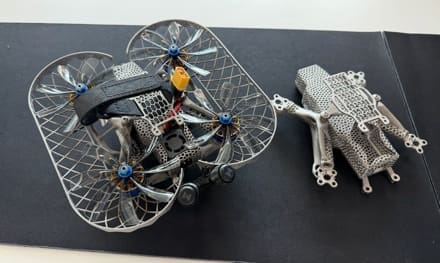
SIG Sauer’s pivot from training aids into full-up drone hardware at SOF Week signals more than a product launch; it’s a quiet admission that the same modular thinking that made the P320 and P365 dominant in the civilian market is now being applied to unmanned systems. The R3 Saber’s 3D-printed airframe and 1.3-kilogram payload bay, paired with end effectors that literally drop a P320 or P365 into the fight via SimFX/UTM or airsoft, means the company is turning its most popular pistols into swappable mission modules rather than fixed weapons. That architecture lets a single quadcopter or the longer-range Scythe carry lethal, less-lethal, or training ordnance without re-certifying an entirely new platform—an approach that mirrors how the 2A community already treats serialized frames as the only controlled part of a firearm.
For gun owners watching ATF rule-making on braces, pistol grips, and “readily convertible” definitions, the implications are immediate. If SIG can certify a drone that legally launches a Title-I firearm as a “payload,” the same logic could eventually be used to argue that an individual’s P320 or P365 remains just a handgun even when it is temporarily attached to something else. Conversely, regulators could attempt to close that loophole by re-classifying any system that allows a handgun to be remotely operated, creating fresh pressure on the very modularity that has driven SIG’s commercial success. Either way, the R3 Saber and its MH-series effectors are the first public proof that America’s largest domestic pistol maker is preparing for a future in which the Second Amendment is exercised both on the ground and in the air.


