

The CMP’s decision to stage full-scale D-Day matches at Talladega isn’t just nostalgia—it’s a deliberate act of cultural preservation that keeps the living memory of 6 June 1944 tied to the very tools that helped win it. By requiring period-correct battle rifles and as-issued 1911s, the program forces competitors to confront the mechanical realities of mid-century small arms: the Garand’s en-bloc clip dance, the 1911’s single-action trigger, and the absence of optics or compensators. That constraint turns every stage into a rolling history lesson, reminding shooters that the Second Amendment isn’t an abstract right to modern sporting goods but the constitutional guarantee that citizens may keep and bear the arms of their era—whatever that era demands.
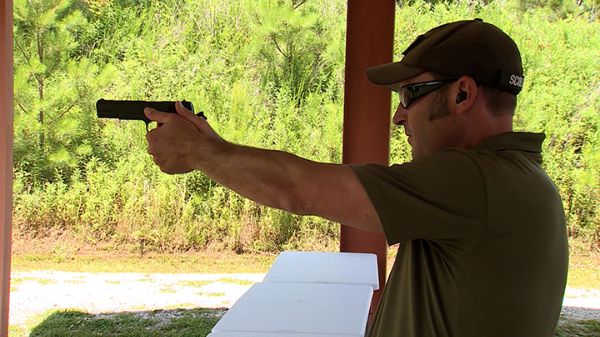
John’s participation in the new as-issued pistol format is more than a publicity stunt; it underscores how CMP events quietly expand the Overton window of acceptable civilian marksmanship. When a nationally televised host steps onto the line with a government-issue 1911 and competes under the same rules as everyone else, the demonstration quietly rebuts the narrative that “military-grade” handguns are too dangerous or too specialized for private citizens. The matches also create a data set: thousands of documented runs with unmodified 1911s and M1s that can be cited whenever legislators claim such firearms have no “sporting purpose.” In an age when the pistol brace rule and proposed semi-auto bans dominate headlines, these competitions serve as living exhibits that the arms in question are not only usable but historically indispensable.
For the broader 2A community the real payoff is cultural rather than competitive. Each Talladega D-Day match plants another flag in the contested ground between “recreational shooting” and “civic education.” Young competitors who cut their teeth on rack-grade rifles learn that the right to keep and bear arms carries an obligation to understand their provenance and function. That knowledge inoculates the next generation against the ahistorical claim that the Second Amendment was meant only for muskets or only for hunting. By turning commemoration into competition, the CMP ensures that the rifles and pistols of D-Day remain not museum pieces but working instruments of American liberty—ready for the range, the record book, and, if history ever repeats, the defense of the Republic itself.


