

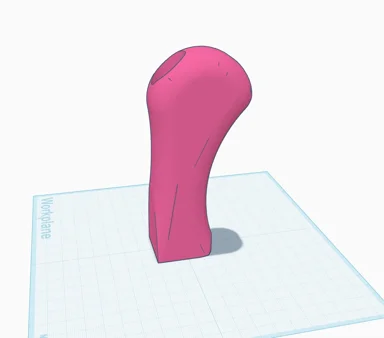
The ATI Nomad has long been the budget builder’s gateway drug into the world of short-barreled shotguns, and now a fresh 3-D-printed grip is giving that cheap Turkish receiver a distinctly American attitude. By reverse-engineering the factory grip footprint and marrying it to the Shockwave’s aggressive angle, the designer has solved a problem that dozens of forum threads left dangling: how to turn a $200 “truck gun” into something that actually feels like it belongs in the same conversation as factory SBRs. The M8-bolt-and-washer solution is pure garage ingenuity—cheap, reversible, and just janky enough to keep the ATF’s Form 1 crowd smiling while they wait for a commercial option that may never come.
What makes this more than another weekend print is the way it quietly expands the Overton window for home-built firearms furniture. Every time someone posts a functional, aesthetically coherent part that didn’t exist yesterday, the 3-D printing community normalizes the idea that end users—not just big manufacturers—get to decide what a defensive shotgun should feel like. That matters when the political class keeps threatening to regulate “pistol grips” and “vertical fore-grips” as if they were dangerous by definition; the more people who can simply print around those restrictions, the harder the restrictions become to enforce. It’s the same principle that turned bump-stock files into an overnight distribution network: once the file is out there, the hardware genie doesn’t go back in the bottle.
For the broader Second-Amendment ecosystem, this grip is a reminder that rights are exercised at the workbench as much as the ballot box. A single hobbyist spotted an unmet need, published the solution, and instantly raised the floor for what a sub-$300 SBS can be. That pattern—spot a gap, fill it with bits and plastic, share the file—keeps the firearms culture decentralized, innovative, and harder to strangle with top-down rules. In an era when regulators would prefer fewer legal configurations rather than more, every new printable interface is another brick in the wall against incremental prohibition.


