

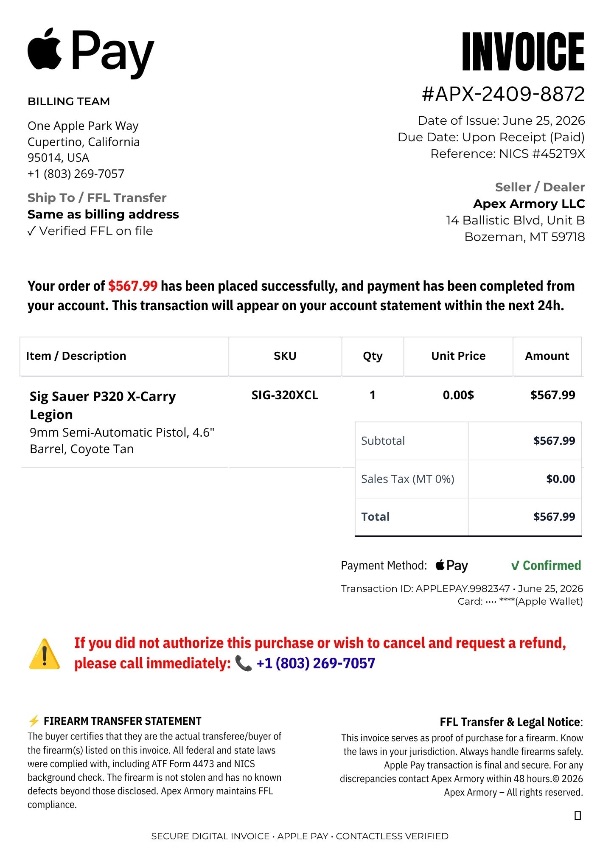
Scammers often operate under the assumption that fear and urgency will override common sense, but this latest attempt proves they sometimes fail to gauge their audience. In this case, the target wasn’t a vulnerable retiree or distracted consumer—it was someone firmly embedded in the firearms community, where skepticism toward unsolicited demands for personal information or sudden “account issues” runs especially high. Rather than panicking at vague threats of legal trouble or frozen assets, the intended victim recognized the classic markers of a phishing scheme and responded with the kind of measured caution that comes from regularly navigating regulatory gray areas and knowing one’s rights. The scammers’ script, built for compliance, collapsed against someone who instinctively treats every unexpected contact as a potential overreach until proven otherwise.
What makes this story particularly instructive for the 2A community is how it underscores the overlap between digital self-defense and the broader mindset of preparedness that defines responsible gun ownership. Just as one wouldn’t hand over a firearm or sensitive paperwork to an unverified stranger at the door, the same principle applies online: verify before you trust. This incident also highlights why privacy and operational security matter more than ever—data brokers and breaches have made it easier than ever for fraudsters to craft convincing lures using publicly available information about purchases, memberships, or even range visits. When scammers miscalculate and approach someone who already treats personal information as a controlled asset rather than casual currency, the attempted deception becomes not just ineffective but almost comedic in its misreading of the room.
For Second Amendment advocates, the takeaway extends beyond laughing at failed phishing attempts. It reinforces why cultivating a culture of informed skepticism protects both individual rights and the community at large. Every time a gun owner refuses to be rushed into divulging details, they’re practicing the same vigilance that keeps them safe on the range, in the field, and in policy debates. Scammers may keep refining their tactics, but audiences who value autonomy—whether over their firearms or their data—remain a tough crowd to fool.


