

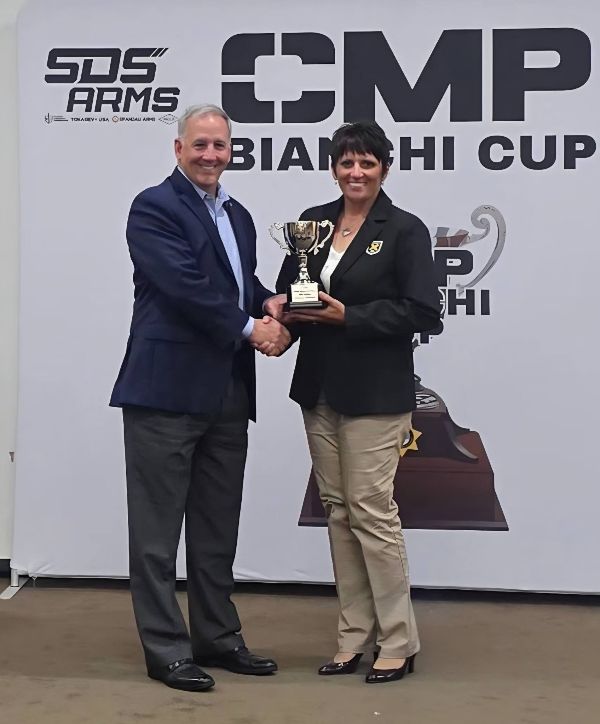
Sally Talbott’s sweep at the 2026 CMP Bianchi Cup—High Woman, Open .22 Champion, and runner-up in the Open Division—does more than add another trophy to the case; it underscores how the action-pistol community continues to reward skill over identity politics. By pairing with A Girl & A Gun to gift her a Walther Patriot Q5 Match, Walther Arms isn’t just handing out hardware; it’s signaling that serious manufacturers see competitive women shooters as both ambassadors and customers who drive product development. In an era when legacy media still frames the Second Amendment as a “man’s issue,” Talbott’s podium finish quietly dismantles that narrative with cold, hard scoresheets.
The Bianchi Cup has always been the ultimate proving ground for practical accuracy under fatigue, and Talbott’s .22 rimfire victory is especially telling: it shows that precision fundamentals transfer across calibers and that smaller-statured or recoil-sensitive shooters can dominate when the rules are truly equal. For the broader 2A ecosystem, every high-placing female competitor expands the Overton window on who “belongs” at the range, which in turn pressures ranges, instructors, and legislators to treat women’s participation as normal rather than novel. The ripple effect is measurable—more female entrants mean more dues-paying members in pro-rights organizations, more demand for left-handed or optics-ready pistols, and ultimately more votes when magazine bans or “assault weapon” restrictions reach the ballot.
What makes this moment durable is that it wasn’t engineered for optics; it emerged from the same merit-based format that has defined Bianchi since 1979. When manufacturers and sponsors reward results instead of checkboxes, they reinforce the core principle that the right to keep and bear arms is individual, not demographic. Talbott’s hardware and her hardware both send the same message: the Second Amendment doesn’t need a diversity quota—it needs more people willing to put rounds on steel.


