

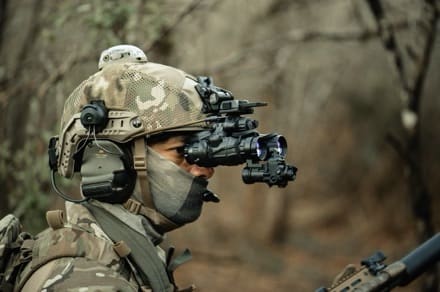
Safran’s new eTAD thermal clip-on isn’t just another gadget for European armies—it’s a signal that the thermal-imaging arms race is accelerating at the soldier level, and that matters to American gun owners who still rely on the civilian market for the same core technology. By clipping a high-resolution thermal overlay onto existing night-vision goggles, the French firm is giving troops the ability to “see heat” without ditching their legacy tubes, a pragmatic nod to budget realities that U.S. special-operations units have long practiced with aftermarket clip-ons. The fact that Safran built the device around real-world feedback from multiple militaries tells you the feature set—compact size, low power draw, and intuitive controls—will trickle down to civilian-legal thermal scopes and monoculars faster than ever before.
For the 2A community this matters because export-controlled thermal sensors are the last major frontier where civilian shooters still lag behind the battlefield standard. Every time a defense contractor like Safran refines detector sensitivity, refresh rate, or power management for NATO forces, those same components eventually appear in U.S.-made units once ITAR thresholds are cleared or domestic equivalents catch up. That means hunters, property owners, and responsible armed citizens gain longer-range detection, better false-alarm rejection in foliage, and lighter weight—advantages that directly translate to safer, more effective use of firearms after legal hours or in no-light conditions. The eTAD’s emphasis on “augmented perception” also hints at future fusion modes that could merge thermal and image-intensified imagery, a capability already appearing in high-end civilian devices and likely to become mainstream within a few product cycles.
Bottom line, Safran’s launch is another reminder that the same geopolitical pressures driving European rearmament are quietly upgrading the tools available to American citizens who value self-reliance. As long as domestic manufacturers stay competitive and regulators don’t choke off access, the next generation of clip-on thermals will be smaller, clearer, and more affordable—exactly the kind of incremental progress that keeps the individual shooter on equal footing with emerging threats, foreign or domestic.


