

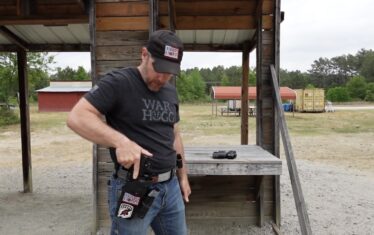
Nobody wins a prize for being the fastest to reholster. If you’re stuffing your pistol back in a hurry, you’re doing it wrong. Here’s the proper sequence: first, scan your environment thoroughly—360 degrees if possible—to ensure no threats linger before even thinking about holstering. Keep your trigger finger indexed straight and off the trigger, eyes on the potential danger zone, not your holster. Only when you’re confident the immediate threat is neutralized do you slowly, deliberately guide the muzzle into the holster, feeling for proper seating with your support hand while maintaining a firm firing grip. Rotate your body to shield the holster from prying eyes or opportunistic grabs, and finally, secure any retention devices with a tactile check. Repeat the scan one last time. This isn’t just technique; it’s a survival ritual drilled into responsible carriers by every legit firearms instructor from Massad Ayoob to modern academy grads.
In the 2A community, this reholstering wisdom cuts through the Hollywood hype where heroes twirl guns like batons before vanishing into the sunset. Real-world defensive gun uses—backed by stats from the Armed Citizens’ Legal Defense Network and CDC data showing over 500,000 DGUs annually—end with the gunfight won, not the quick-draw show. Rushing the reholster invites negligent reholstering discharges (NRDs), those tragic NDs that anti-gunners splash across headlines to fuel repeal efforts. We’ve seen it: a Florida man in 2023 shot his leg during a post-incident fumble, handing ammo to Everytown. Proper sequence isn’t pedantic; it’s proactive liability management, preserving your carry rights by proving competence in court or to skeptical sheriffs enforcing may-issue schemes.
For concealed carriers, mastering this elevates you from casual owner to tactical citizen, ready for the chaos of active shooter scenarios or urban unrest where de-escalation means holstering without becoming the next statistic. Train it dry-fire style weekly, video yourself under stress (simunition if you’re hardcore), and embed it in family drills. The implication? In a post-Bruen world expanding carry reciprocity, slow-and-steady reholstering fortifies our culture against disarmament narratives, turning every safe holster into a quiet vote for the Second Amendment. Practice it, live it, and watch the busybodies’ arguments holster themselves.


