

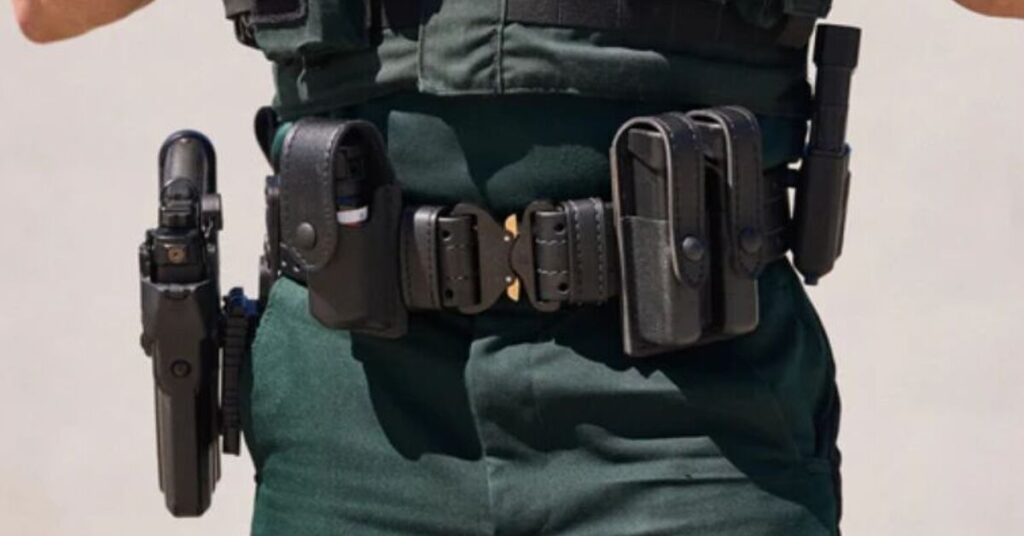
Duty belts have been the same rigid, finicky contraption for generations because the industry treated them as an afterthought rather than a system that has to survive real-world abuse. Threading pouches in sequence, wrestling with keepers that migrate or pop off, and watching hook-and-loop liners shed their grip after a few hundred shifts are not minor annoyances; they are daily reminders that legacy gear prioritizes tradition over the officer who actually wears it. When a company like Safariland finally attacks those pain points with the HOLLE platform, it signals a shift from incremental tweaks to genuine systems thinking—something the broader firearms and tactical community has been demanding for years as carry demands grow more complex.
For the 2A world this matters because duty-belt lessons travel quickly into civilian and competition gear. The same retention and modularity problems that frustrate patrol officers show up in range belts, competition rigs, and everyday-carry setups that must stay planted during movement yet allow rapid reconfiguration. A solution that eliminates threading order, keeps keepers locked without constant fiddling, and maintains consistent tension over time removes friction between the user and the tools, which in turn supports faster, safer, and more confident handling of firearms and accessories. In an era when regulatory pressure and liability concerns already complicate training and carry, gear that simply works without constant adjustment frees mental bandwidth for the fundamentals that actually keep people safe.
The deeper implication is cultural: when manufacturers stop accepting “that’s just how duty gear has always been” as an answer, they raise the baseline expectation for every belt, holster, and carrier that follows. Officers and armed citizens alike benefit when the hardware stops fighting the mission, and the ripple effect is a market that rewards thoughtful engineering over nostalgia.


