

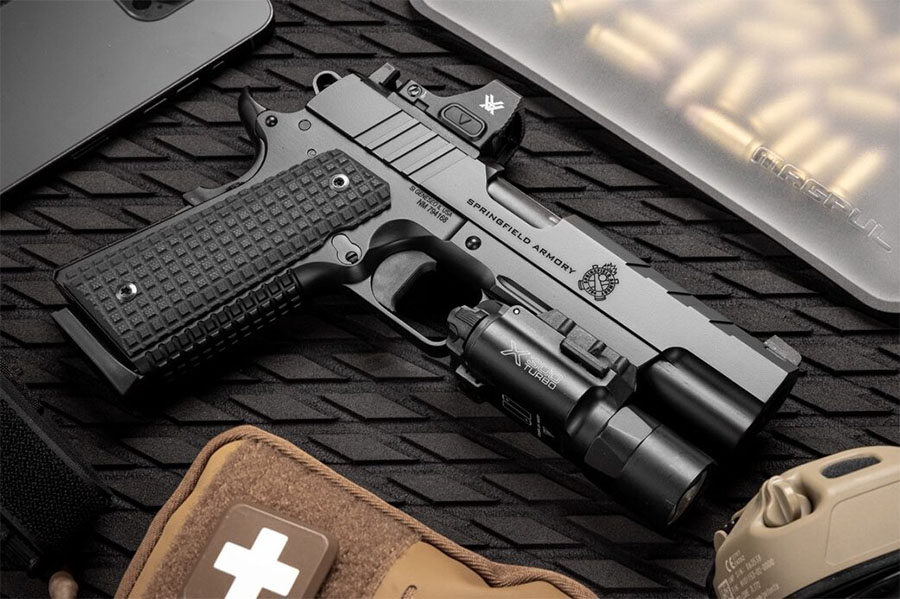
In a move that underscores just how far some jurisdictions will go to criminalize everyday carry gear, the Second Amendment Foundation has filed suit against the lone American city that still treats red-dot optics, weapon-mounted lights, and single-action-only pistols as contraband. While the rest of the country—including multiple California police agencies—has embraced these tools as standard-issue enhancements for speed, accuracy, and low-light identification, this outlier treats them as exotic threats rather than the practical upgrades they are. The lawsuit isn’t merely about gadgets; it’s a direct challenge to the notion that government can arbitrarily declare widely adopted safety features off-limits to law-abiding citizens while simultaneously arming its own officers with the same technology.
What makes the case especially telling is the city’s refusal to acknowledge the safety data that has driven law-enforcement adoption nationwide. Red dots shrink qualification times and improve hit probability under stress; weapon lights eliminate the dangerous “candle-and-gun” juggling act that once defined low-light encounters; and SAO triggers, properly managed with modern safeties, deliver the crisp, consistent pull many competitive and defensive shooters prefer. By banning these features only for civilians, the jurisdiction creates a two-tier system in which police enjoy clearer sight pictures and faster target acquisition while residents are forced to rely on iron sights and handheld flashlights—an arrangement that mocks the very idea of an armed citizenry able to match the capability of those sworn to protect them.
For the broader Second Amendment community the implications are immediate and strategic. A favorable ruling would not only restore access to these accessories in one locality but could also serve as persuasive precedent against the next round of feature-based restrictions that inevitably follow magazine bans and assault-weapon laws. More importantly, the case reframes the debate: instead of arguing abstract rights in a vacuum, litigants can now point to empirical improvements in marksmanship and officer survival that these same jurisdictions already certify for their own personnel. In short, the suit forces the question of whether the Second Amendment protects only the theoretical right to keep a gun or the practical right to keep a gun that actually works in 2025.


