

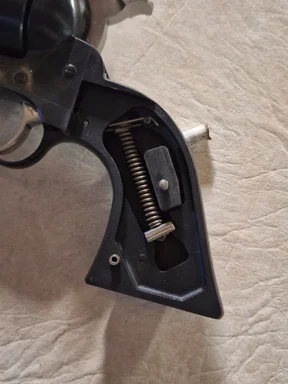
The Ruger Single Action Grip Support Block from Laffs Dynamics is a small but telling example of how 3D printing is quietly reshaping the way owners maintain and customize their firearms. By inserting a simple polymer spacer between the grip panels of XR3-RED framed revolvers, shooters can now torque the grip screw without fear of cracking expensive wood or laminate panels—an issue that has long plagued Blackhawk, Single Six, Wrangler, and Old Army owners. The design’s use of carbon-fiber nylon printed at near-solid infill shows how hobbyist-grade materials can deliver functional strength that rivals factory parts, all while remaining fully user-serviceable and replaceable.
For the 2A community this represents more than a clever fix; it underscores the growing importance of decentralized manufacturing in an era when supply chains and regulatory pressures can make even minor replacement parts scarce or expensive. Rather than waiting for Ruger or aftermarket vendors to address a decades-old design shortcoming, an individual has published a solution that anyone with a modestly equipped printer can produce in an afternoon. That capability matters when legacy manufacturers discontinue models or when political climates threaten to restrict access to factory components.
Beyond the immediate utility, the grip block hints at a broader shift: the 3D-printing community is maturing from novelty trinkets to mission-critical firearm accessories. As more users share dimensionally accurate, material-specific files for legacy platforms, the line between “factory” and “user-modified” continues to blur, reinforcing the principle that an armed citizenry equipped with both tools and knowledge is harder to disarm through regulation or attrition.


