

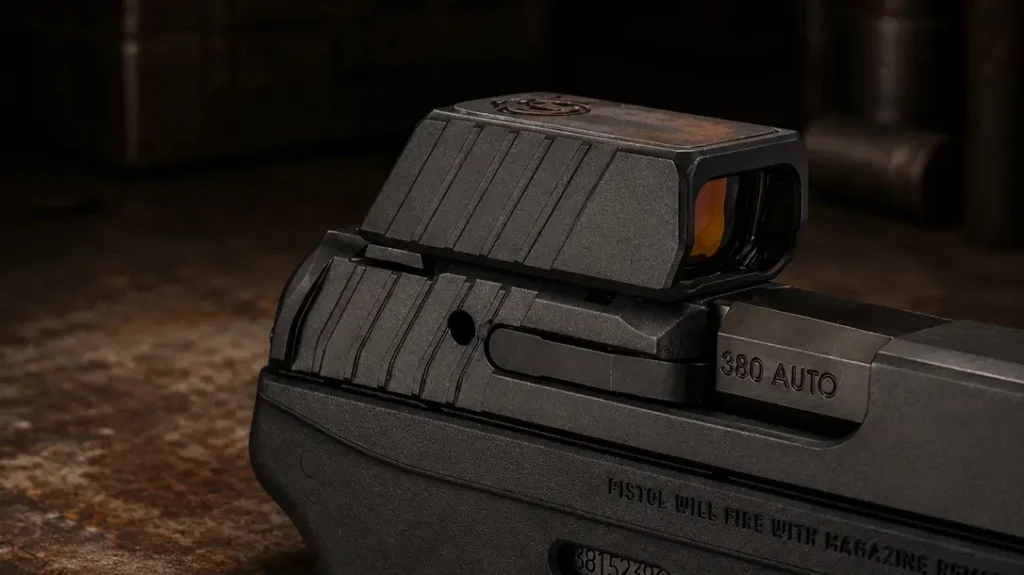
Ruger’s decision to bolt a factory-ready micro reflex sight onto the LCP MAX isn’t just a product update—it’s a quiet admission that even the smallest defensive pistols now live in an optic-ready world. By engineering the ReadyDot specifically for the MAX’s slide contours and recoil profile, Ruger removes the usual aftermarket headaches of milling, plate tolerances, and zero shifts that once kept pocket pistols in the iron-sight era. The result is a sub-six-ounce package that still disappears in a pocket yet delivers the same fast-acquisition advantages once reserved for full-size service guns, effectively shrinking the capability gap between deep-concealment backups and primary carry pistols.
For the 2A community this matters because it normalizes red-dot performance at the lowest end of the size-and-price spectrum, where many new or budget-conscious carriers begin their journey. When a major manufacturer validates micro-optics on a $300–$400 pistol, it signals that the technology has matured past the “gucci” phase and into everyday utility, pressuring competitors to follow or lose shelf space. More importantly, it reinforces the principle that law-abiding citizens should have access to the same sighting tools used by professionals—no matter how small the gun—without needing a gunsmith or a Form 1.
The broader implication is cultural as much as tactical: an entire class of firearms long dismissed as “last-ditch only” now carries the speed and precision once limited to duty weapons, expanding the practical envelope of lawful self-defense without enlarging the firearm. In an era when states continue to test the limits of the Second Amendment, Ruger’s move quietly expands the toolkit available to millions of carriers who choose the smallest footprint possible, proving that rights don’t shrink with the size of the gun.


