

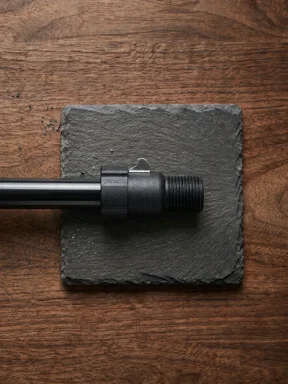
The Ruger Mark II has long been the gateway pistol for plinkers and precision shooters alike, yet its factory barrel has always been a dead end for anyone wanting to run a suppressor or muzzle device without a gunsmith’s bill. This 3D-printed 3/4-16 adapter turns that limitation into an afternoon project: it indexes on the existing front-sight block, clamps down with printed collars, and pulls itself home as you thread on whatever device you already own. In one stroke the design removes both the cost and the downtime of a machined barrel, proving that the real bottleneck in accessorizing older rimfires isn’t metallurgy—it’s imagination.
What makes the solution quietly radical is how it weaponizes accessibility. Nylon prints are light enough that the added ounces are negligible, and the same printers already churning out suppressors or faux moderators can now spit out the mount that lets those accessories live on a stock barrel. That democratizes experimentation: a high-school kid with a $300 printer and a spool of PA12 can now test three different muzzle weights in a single range session, something that used to require three separate gunsmithing jobs. The 2A community has spent years arguing that “shall not be infringed” extends to the tools we use to exercise the right; this little snap-on collar is a physical manifestation of that argument, showing that the tooling of freedom is migrating from CNC benches to kitchen tables.
Still, the adapter’s very existence spotlights an ongoing arms race between regulation and iteration. As states flirt with magazine bans or “assault weapon” features, the ability to reconfigure a firearm without permanent modification becomes a quiet insurance policy. More importantly, it reframes the conversation around 3D-printed gun parts from “dangerous loophole” to “ordinary gunsmithing for people priced out of traditional gunsmithing.” If a printable thread adapter can turn a 1980s plinker into a suppressor host overnight, the next evolution might be entire serialized frames or modular chassis—each printed, tested, and iterated in the same garage where the first adapter snapped into place.


