

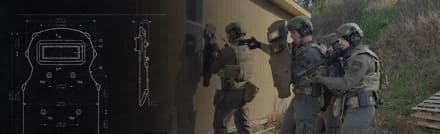
RTS Tactical’s newly granted U.S. Patent No. 12,624,927 isn’t just another incremental tweak to ballistic-shield glass; it’s a direct strike at the weakest link that has plagued law-enforcement and civilian shield users for decades. Traditional viewport assemblies rely on a lattice of bolts that create stress risers, invite moisture intrusion, and turn every hit into a potential spider-web of cracks radiating from the hardware itself. By eliminating the bolts entirely, RTS has produced a viewport that maintains the shield’s structural envelope even after repeated strikes, effectively turning what used to be a “sight port with an expiration date” into a durable, mission-long window. For the 2A community—where private citizens increasingly train with hard armor and shields for home-defense or vehicle-recovery scenarios—this translates into gear that doesn’t force a trade-off between situational awareness and long-term reliability.
Beyond the engineering win, the patent signals a broader shift: small American armor makers are no longer content to iterate on designs inherited from military-contract monocultures. RTS’s boltless solution emerged from listening to end-users who repeatedly saw compromised viewports after drills that simulated the kind of sustained fire a prepared citizen might face when securing a hallway or extracting family members. That user-driven innovation loop strengthens the argument that the right to keep and bear arms includes the right to field equipment that actually survives the fight, not merely meets a lab spec written for different threat models. In practical terms, departments and individual owners now have a data-backed reason to retire older bolt-heavy shields whose viewports have become training scars waiting to happen.
The ripple effects extend to training culture and legal preparedness. Instructors can now run longer, more realistic force-on-force evolutions without the artificial pause of “don’t hit the glass,” and civil-rights attorneys defending armed citizens can point to documented durability improvements when articulating why a particular piece of gear was a reasonable choice under the circumstances. RTS’s patent, in other words, doesn’t merely protect an invention; it quietly raises the baseline expectation for what “shall not be infringed” looks like when the infringement might come from a hallway at 3 a.m. rather than a courtroom.


