

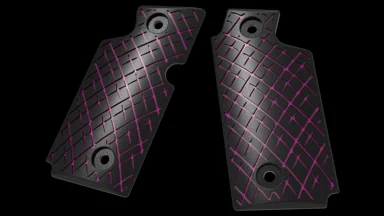
The Sig P238 has long been a favorite among concealed-carry enthusiasts who want 1911-style ergonomics in a pocket-friendly package, yet factory grip panels often leave something to be desired—either too slick for rapid draws or too aggressive for all-day carry. Laffs Dynamics’ rough-cut cross-hatch pattern strikes a deliberate middle ground: the raised ridges bite just enough to anchor the shooter’s hand during the draw stroke and under recoil, while the valleys keep the texture from printing through light cover garments or abrading skin during extended range sessions. Because the panels are printed in PLA+ at a conservative 40 %+ infill with five solid perimeters, they deliver surprising rigidity without adding noticeable bulk, proving that desktop-grade filament can meet the abuse tolerance demanded by a daily-carry micro .380.
Beyond the tactile upgrade, this release underscores a larger shift in the 2A ecosystem. Ten years ago, aftermarket support for a SIG subcompact meant waiting for factory variants or paying gunsmith premiums; today, an individual can download a file, hit print, and have functional, customizable parts the same afternoon. That capability decentralizes manufacturing in a way that directly reinforces the right to keep and bear arms—owners are no longer solely dependent on large-scale production runs or import restrictions. It also invites a wave of rapid iteration: users can tweak the hatch depth, experiment with grip angle, or even color-match a specific holster without leaving their workbench.
For the community, the takeaway is twofold. First, the P238’s aftermarket is no longer limited to what SIG chooses to catalog; second, the barrier to meaningful personalization has dropped from “order and wait” to “slice and print.” As more shooters adopt these tools, expect an expanding library of grip textures, magazine extensions, and optic plates—all of them living outside traditional supply chains and therefore outside the reach of politically motivated embargoes or sudden model discontinuations. In short, Laffs Dynamics’ modest grip panels are a small but tangible demonstration that the future of defensive firearms will be shaped as much by filaments and firmware as by steel and injection molds.


