

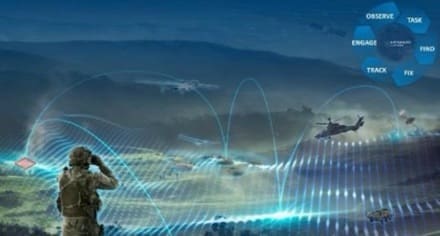
Rheinmetall’s new Battlesuite isn’t just another command-and-control app—it’s the connective tissue that turns individual weapons into a living, breathing kill web. By stitching together the FV-014 loitering munition, the debut of the Containerized Missile Launcher, and every other sensor or shooter on the battlefield, the German firm is selling the idea that software can now orchestrate reconnaissance and strike faster than any single platform could manage on its own. For the 2A community watching from afar, the lesson is unmistakable: the same digital backbone that lets a battalion commander push a drone feed to an artillery tube in seconds is the exact kind of architecture civilian shooters will eventually demand when smart optics, networked suppressors, and AI-assisted target acquisition move from the military to the range and the ranch.
What makes this development especially relevant is how openly Rheinmetall is advertising the “software-defined” nature of the system. Instead of bolting new hardware onto old vehicles, the company is treating the battlespace like an app store where new munitions, sensors, or even allied platforms can be integrated with a software update. That model mirrors what American gun owners have already seen with red-dot firmware, ballistic calculators, and cloud-synced shot timers; the next logical step is a civilian-grade “Battlesuite Lite” that lets a competition shooter or a rancher link multiple devices without waiting for a single manufacturer to play catch-up. The Containerized Missile Launcher’s debut only underscores the point—modular launch cells dropped from a truck bed could one day translate into modular magazine wells or quick-swap optic rails that civilians can configure on the fly.
The deeper implication is strategic rather than tactical. If Western militaries standardize on open digital architectures, the same standards will trickle into the commercial market the way MIL-STD connectors and Picatinny rails did decades ago. That means 2A advocates should be watching not just for new hardware bans, but for attempts to lock down the software layer that will soon govern how firearms talk to each other. A future where your optic, suppressor, and rangefinder form their own mini battlesuite is already on the drawing board; the only question is whether that ecosystem stays open to civilian innovation or gets wrapped in the same export controls and encryption rules that keep military radios out of private hands.


