

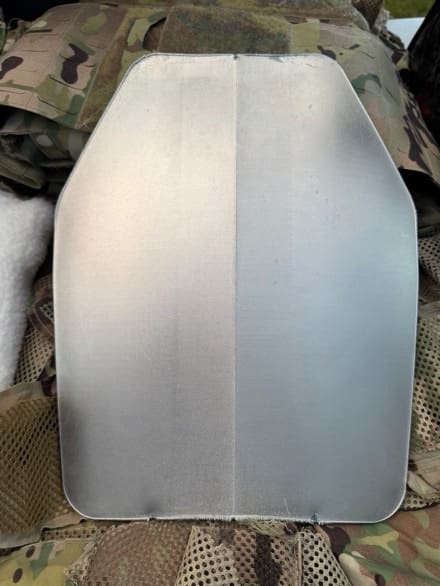
In a move that quietly underscores the fragility of global supply chains, Talos Advanced Systems has unveiled a fully domestic plate-backer designed to stand in for the polyethylene soft armor that Canadian operators have long imported. By engineering a 100 % Canadian solution, the company is essentially stress-testing what happens when tariffs, export controls, or geopolitical friction cut off access to the high-performance resins and fibers that dominate today’s body-armor market. For American Second Amendment advocates watching from south of the border, the development is both a cautionary tale and a proof-of-concept: even nations with strict firearms laws still feel the downstream effects of material restrictions, and the same logic applies to U.S. manufacturers who could one day face similar choke points if domestic polymer or aramid production is ever curtailed.
What makes the Talos backer noteworthy is not merely its nationality but the engineering trade-offs it forces into the open. Traditional PE plates excel at weight-to-performance ratios, yet they rely on specialized resins whose precursors are concentrated in a handful of overseas facilities. By substituting indigenous textiles and matrix materials, Talos is demonstrating that acceptable multi-hit performance and back-face deformation numbers can still be achieved without those imports—albeit perhaps at a modest increase in areal density. That revelation travels quickly through pro-2A circles: if a Canadian firm operating under far tighter end-user constraints can localize its supply chain, U.S. companies already enjoy a regulatory and industrial head start that could be leveraged to harden the domestic armor ecosystem against future shocks.
The larger implication is strategic rather than tactical. Every restriction on components—whether through environmental rules on chemical precursors, export-license regimes, or sudden raw-material shortages—functions as a de-facto restriction on the tools citizens rely on for self-defense. Talos’s work shows that innovation can blunt those restrictions, but only when private industry is allowed to iterate without waiting for government allocation of critical feedstocks. For the 2A community, the lesson is clear: supporting a robust, vertically integrated North American materials base isn’t just good industrial policy; it is an insurance policy for the continued availability of the very equipment that keeps armed citizens in the fight.


