

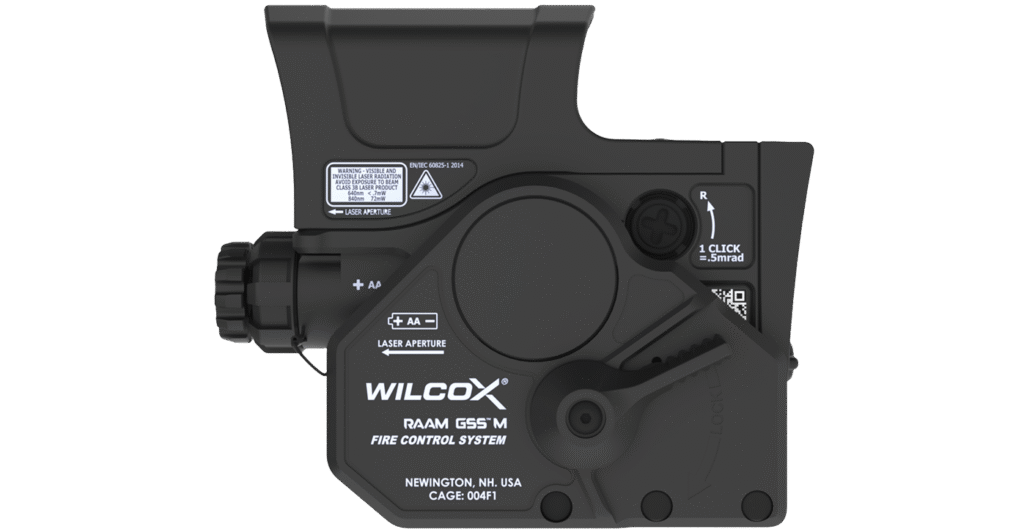
The Wilcox RAAM GSS M takes the Army’s proven Grenadier Sighting System and adds a simple but brilliant locking detent that freezes the launch angle once the grenadier dials it in, letting him service multiple targets at the same range without re-zeroing between shots. That single mechanical refinement turns a solid military optic into something that feels almost unfair on the range: daytime hits climb, nighttime laser ranging stays locked, and the whole engagement cycle shrinks from “aim, adjust, fire, repeat” to “lock, fire, next.” For civilian shooters who run 37 mm or 40 mm launchers on their registered platforms, the same ergonomics translate directly—less fiddling, more hits, and a dramatically shorter learning curve for anyone who wants to stretch the practical reach of their short-barreled rifle without turning into a full-time ballistic calculator.
What makes this development especially interesting to the 2A community is how it quietly expands the capability envelope of the modern semi-auto platform without touching the receiver itself. A locked trajectory sight means a lawfully owned 14.5-inch or 16-inch carbine wearing a 37 mm launcher can now deliver consistent area effects at distances that used to require either a dedicated M203-style rig or a lot of Kentucky windage. That capability matters when the discussion turns to home-defense perimeters, rural property protection, or even the legal use of less-lethal options in states that still allow 37 mm signaling devices. More importantly, it demonstrates that innovation in the small-arms accessory market continues to outpace legislative attempts to define what constitutes a “military feature,” because the real advance here is software-like precision achieved through old-school mechanical cleverness.
The larger implication is that every incremental improvement in sighting and fire-control technology lowers the skill floor while raising the performance ceiling for private citizens. When a civilian can achieve, with modest training, the hit probability that used to belong only to designated grenadiers, the practical balance of power between an armed populace and any would-be aggressor shifts measurably. The RAAM GSS M is therefore more than another optic; it is fresh evidence that the right to keep and bear arms is not a static list of 18th-century implements but a living continuum of tools whose effectiveness the American citizen is still free to enhance.


