

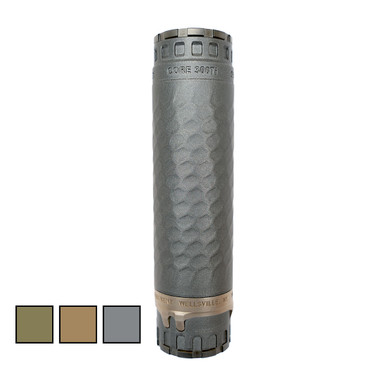
Precision Armament’s new TiTrex 300Ti isn’t just another titanium can—it’s a 3D-printed leap that compresses the usual trade-offs between weight, strength, and sound reduction into a single, American-made package. By printing the entire 7.62 mm suppressor from titanium rather than machining it from billet, the company can create internal geometries that traditional subtractive methods simply can’t reach, yielding tighter baffle spacing and more efficient gas expansion without adding ounces. For the 2A community, that matters because every gram saved on the muzzle is a gram that stays on target during rapid strings or extended hunts, and every decibel reclaimed is one less reason for anti-gunners to claim suppressors are “dangerously quiet.”
What makes the TiTrex story bigger than its specs is the manufacturing signal it sends. 3D printing titanium at production volumes proves domestic additive manufacturing has matured past prototypes and into mission-critical components, insulating the suppressor supply chain from foreign titanium tariffs or export controls. That resilience strengthens the argument that shall-issue shall-carry laws and the Hearing Protection Act aren’t just about rights—they’re about keeping advanced hearing-safe technology affordable and available to law-abiding citizens rather than locked behind boutique backorders. In short, the TiTrex shows how innovation and constitutional carry can reinforce each other: lighter, quieter tools make responsible ownership more practical, and practical ownership keeps the industry—and the culture—moving forward.


