

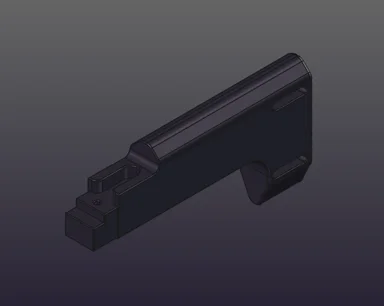
The Praxis-2 AKM stock is a perfect example of how 3D printing is quietly rewriting the rules of what an individual can do with their own firearms. Instead of chasing aesthetics or chasing ounces off the front end, the designer leaned into the physics that actually matter to a new shooter: shortening length-of-pull, spreading recoil over more shoulder real estate, and deliberately adding mass at the rear to improve balance. That last move is especially clever; while you can’t lighten an AK’s trunnion and barrel, you can shift the center of gravity backward with a few hundred grams of PET-GF/CF, giving the rifle a more neutral feel without touching anything regulated. The result is a functional, no-frills part that directly addresses the complaints most first-time AK shooters voice after a single range session.
For the broader 2A community this represents something deeper than another printable furniture option. It demonstrates that the same technology enabling rapid prototyping of legal accessories is also lowering the barrier for people who might otherwise give up on the platform. By publishing the files with clear print settings, hardware lists, and an explicit disclaimer that the part is not a firearm, the designer models responsible decentralization: anyone with a printer and basic mechanical sense can improve ergonomics on their own rifle without waiting for a manufacturer to notice the market gap. The sling-mount detail and the promise to teach proper sling use further underscore that this is about skill-building, not just hardware.
In an era when regulators eye every new manufacturing method with suspicion, projects like this quietly reinforce the core Second Amendment argument that an armed populace is also an informed and self-reliant one. The stock may be simple, but the precedent it sets is not.


