

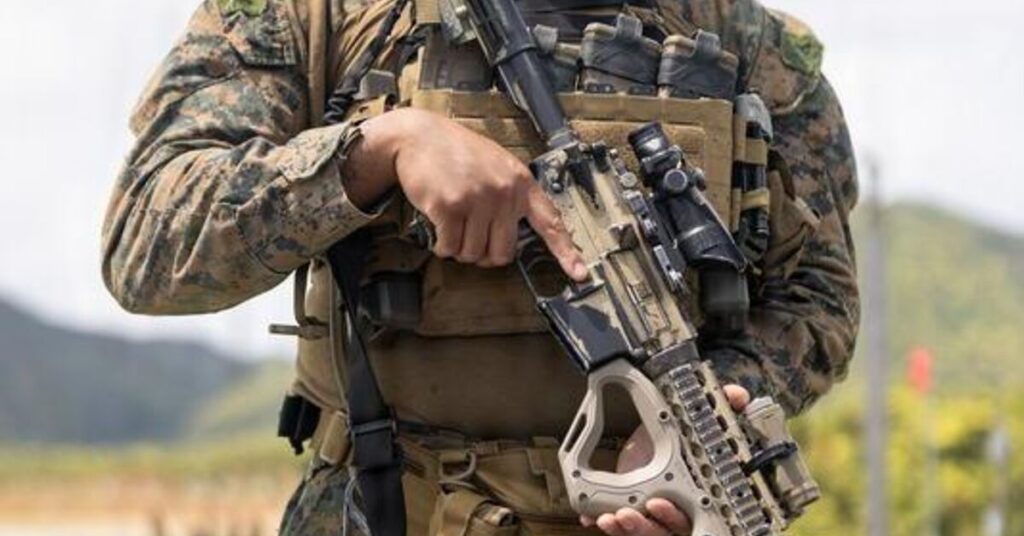
The Marine in this photo isn’t just swapping his M249 for an M27—he’s quietly rewriting the book on what a squad automatic weapon can look like in the hands of a rifleman. By bolting a HERA Arms CQR foregrip onto the M27’s handguard, this gunner has turned a standard-issue Infantry Automatic Rifle into something that feels more like a personal defense weapon crossed with a compact carbine. The CQR’s thumbhole ergonomics pull the support hand forward and lock the wrist at a natural angle, giving the shooter better control during rapid strings of fire without adding the bulk of a traditional vertical grip. For Marines already carrying extra ammo and optics, that small change in handling can translate into tighter groups and less fatigue when the squad is bounding through thick vegetation or urban rubble.
What makes this image noteworthy for the broader Second Amendment community is how it illustrates the speed at which military innovation leaks into civilian hands. The same HERA CQR grip that first appeared on European sporting rifles is now riding on a Marine Corps weapon system that itself started life as a semi-automatic-only civilian rifle—the HK416. When service members return to the private sector, they bring those lessons home, and the aftermarket follows. Within months of photos like this surfacing, civilian shooters are ordering the same grip for their own AR-pattern rifles, effectively importing combat-proven ergonomics into the lawful self-defense and sporting market. That cycle—military adoption, field modification, civilian replication—keeps pushing the envelope on what Americans can legally own and how they can configure it.
The larger implication is that the M27’s growing footprint inside the Corps is accelerating a quiet shift away from belt-fed squad weapons toward magazine-fed, optics-heavy rifles that individual Marines can master faster and maintain more easily. For 2A advocates, this evolution is a living argument against restrictions that treat certain ergonomic accessories or “military-style” features as inherently dangerous. If the Marine Corps is willing to let a machine gunner run a thumbhole grip on an automatic rifle in training, the notion that the same feature on a semi-automatic rifle poses some unique threat to public safety collapses under its own weight. The photo is therefore more than a gear snapshot; it’s evidence that practical, lawful innovation continues to outpace the regulatory imagination.


