

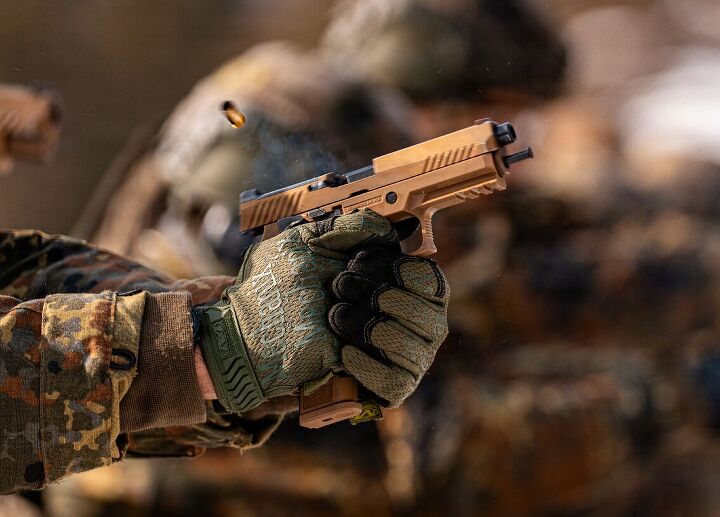
The joint training at Grafenwoehr is a textbook example of how real-world interoperability is built one trigger squeeze at a time. When German troops step onto the line with U.S.-issue SIG Sauer P320s and M17/M18 variants, they’re not just borrowing hardware—they’re validating the same modular, striker-fired platform that millions of American civilians now carry daily. That shared DNA between military sidearms and the commercial market means lessons learned on the range in Bavaria flow straight back to American gun owners through improved ergonomics, optics-ready slides, and duty-grade reliability that only comes from rigorous, multi-national testing.
For the 2A community, these photos are more than feel-good diplomacy; they’re quiet confirmation that the civilian firearms market is no longer an afterthought to military procurement. The same companies supplying NATO allies are also racing to meet the demands of American shooters who want duty-proven pistols without waiting for government contracts. When German soldiers train with the identical grip modules, optics cuts, and suppressor-ready barrels that U.S. civilians can buy tomorrow, it underscores how private-sector innovation and constitutional carry rights keep American manufacturing at the cutting edge—rather than the other way around.
The deeper implication is strategic: every hour spent on the line at Grafenwoehr tightening shot groups and standardizing reloads is an hour that strengthens both alliance cohesion and the domestic industrial base that equips free citizens. In an era when some politicians still treat the Second Amendment as a quaint relic, these images quietly demonstrate its modern utility—arming not only American service members but also enabling the very export and training partnerships that keep NATO lethal and interoperable.


