

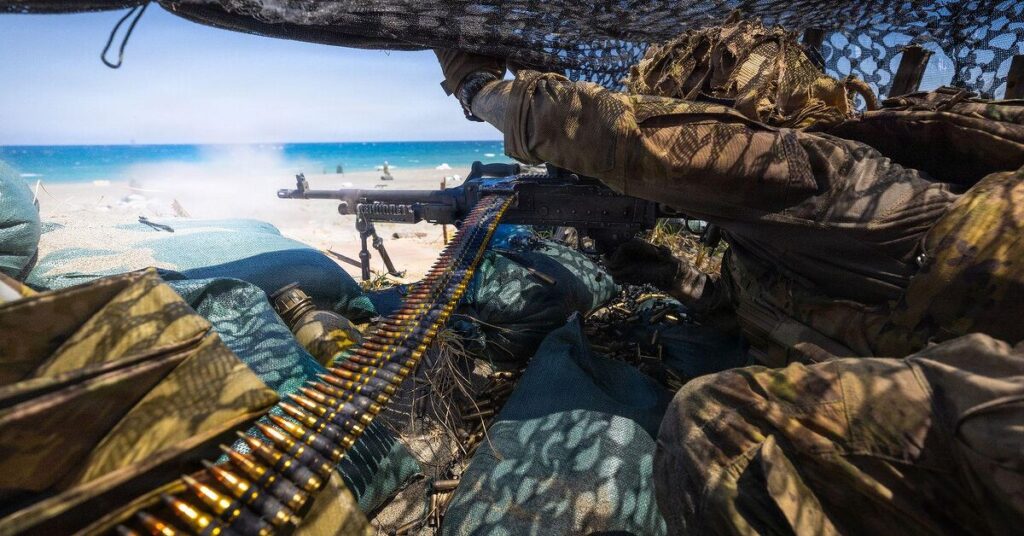
The image of Pfc. Griffin Clemen behind an M240B on Luzon’s La Paz Sand Dunes is more than a snapshot from Balikatan 2026; it’s a reminder that the belt-fed machine gun remains the decisive tool for denying an enemy beachhead. In a region where Chinese landing craft could appear with little warning, the 25th Infantry Division’s decision to train the 240B in surf-zone conditions underscores how a single, crew-served firearm can shape an entire campaign. The weapon’s sustained-fire capability, modular optics rail, and quick-change barrel turn a stretch of Philippine sand into a lethal engagement area long before heavier systems can be brought ashore.
For the 2A community, the scene carries a deeper message about rights and readiness. The same technical features that make the M240B indispensable on a Pacific island—robust construction, parts standardization, and proven ergonomics—are the direct result of a civilian market that prizes reliability and innovation. When private citizens can own, train with, and improve upon belt-fed and semi-auto platforms, they create a reservoir of skilled shooters, armorers, and designers that the military can draw upon in times of crisis. Balikatan’s live-fire drills therefore serve as both a tactical rehearsal and an implicit endorsement of the constitutional framework that keeps those skills sharp at home.
Strategically, the exercise signals that Washington and Manila intend to make any future amphibious assault prohibitively expensive. By rehearsing counter-landing fires with weapons that trace their lineage to civilian-accessible designs, the U.S. and its allies are betting that a well-armed citizenry and a well-trained expeditionary force are two sides of the same deterrent coin. In short, the dunes of Luzon are not just a training ground; they are a proving ground for the idea that the right to keep and bear arms ultimately strengthens the nation’s ability to project power abroad.


