

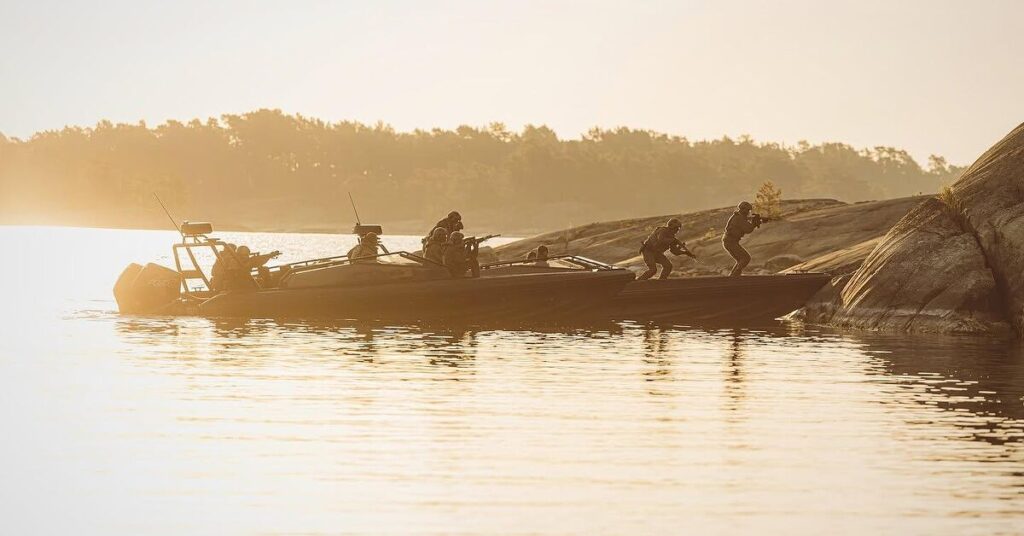
Speed is the weapon in the Stockholm archipelago, and Zulu Marine’s 33P High-Speed RIB proves it by threading needle-tight passages and unpredictable chop at velocities that turn geography into an ally rather than an obstacle. Built on the same hull that European coast-guard and defense agencies already trust, the 33P pairs a deep-V composite structure with outboard muscle that lets operators close distance, interdict, or simply outrun trouble before it materializes. For the 2A community the lesson is immediate: the same engineering principles that reward a fast, reliable hull—light weight, redundant systems, and operator-centric ergonomics—mirror what responsible citizens demand in defensive firearms: speed to deploy, reliability under stress, and the capacity to dominate a dynamic environment rather than merely survive it.
What makes the 33P noteworthy beyond its Scandinavian pedigree is the implicit recognition that maritime security, like personal security, cannot be outsourced to slow, bureaucratic response times. Agencies across Europe have validated the platform precisely because it shrinks the decision loop between threat detection and effective action; private citizens facing analogous gaps in rural or coastal response windows can draw the same conclusion about their own layered defenses. The boat’s modular mission bays and reinforced mounting points also underscore a broader truth: purpose-built equipment scales from professional to civilian use when the core architecture remains sound, much as a well-designed rifle can transition from duty to home-defense roles without compromise.
In an era when regulatory pressure on both boats and firearms often targets capability rather than conduct, the 33P stands as a reminder that restricting speed or capacity rarely enhances safety—it simply hands the advantage to those already operating outside the law. The 2A community has long argued that rights exercised responsibly preserve the very margins of safety that governments claim to monopolize; the Zulu Marine example shows the same logic afloat. Whether threading island channels at thirty-plus knots or maintaining a ready firearm at home, the principle is identical: the tool that arrives first, functions reliably, and stays in skilled hands is the one that actually deters aggression.


