

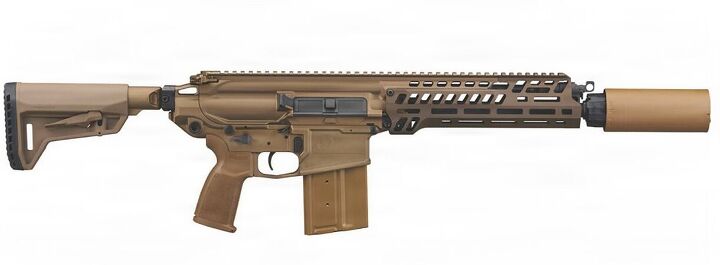
The U.S. Army continues its long, expensive, and often frustrating quest to modernize its small arms inventory, and this latest studio-quality photo drop offers a rare clean look at where things stand. Side by side we see the legacy M4A1 carbine, the new M7 rifle chambered in 6.8x51mm, the belt-fed M250 automatic rifle that replaces the M249 SAW, and, perhaps most intriguingly, the resurrected XM8 carbine. The XM8, once part of the failed Objective Individual Combat Weapon program and later the Lightweight Modular Weapon System effort, has been quietly refined by Sig Sauer and is now apparently back in serious contention. Seeing it presented alongside the freshly adopted NGSW winners feels less like nostalgia and more like an insurance policy or a subtle warning shot across industry bow.
For the 2A community this imagery carries layered implications. On one hand, the military’s shift to a true intermediate cartridge with dramatically higher chamber pressure and improved barrier defeat capability validates what many civilian shooters and independent testers have argued for years: the 5.56mm has real limitations against modern body armor and in longer-range engagements. The M7 and M250 represent a genuine, if belated, leap in terminal performance and suppressive fire sustainability. Yet the reappearance of the XM8, a polymer-heavy, highly modular design that was politically torpedoed nearly two decades ago, reminds us how fickle Pentagon procurement can be. Billions spent, careers ruined, programs canceled, only for concepts to cycle back when requirements or politics shift. It’s a masterclass in why the free market and innovation outside government contracts remain the true engines of firearms advancement.
Civilians should watch these programs closely but not hold their breath waiting for trickle-down perfection. The 6.8x51mm’s performance edge comes with increased weight, recoil, and ammunition cost, realities the Army is still wrestling with. Meanwhile, the aftermarket, independent designers, and America’s vast private arsenal continue to iterate faster than any bureaucracy. The real story isn’t which rifle the Pentagon ultimately stamps “standard issue” on; it’s that the constitutional right to keep and bear arms ensures citizens aren’t stuck with whatever the latest Program Executive Office decides is good enough. While the Army tests polymer wonder-guns in sterile studios, millions of Americans daily vote with their wallets and range time on what actually works. That decentralized proving ground remains the most honest and effective small arms development system on earth.


