

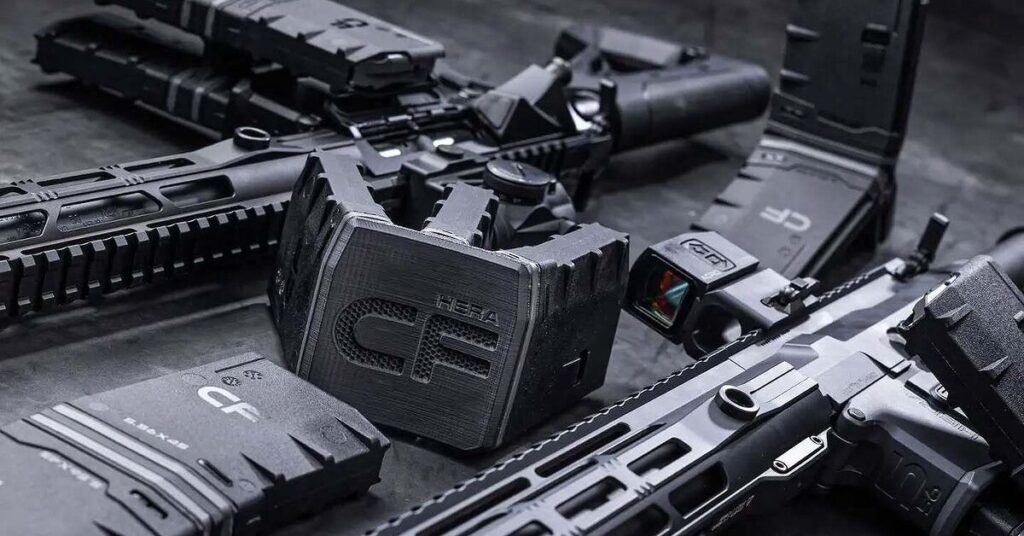
The HERA Arms CF Coupler’s three-way star geometry is more than a novelty; it’s a deliberate re-think of how a shooter manages reloads under pressure. By locking three ten-round magazines around a single hub, the design eliminates the linear “front-back” dance that traditional couplers force on the support hand. Instead, the next magazine is always within a quarter-turn arc, shaving fractions of a second that matter when the clock is running or the threat is closing. The carbon-fiber construction keeps added weight negligible, so the penalty for carrying three magazines in one unit is measured in ounces rather than pounds—an important detail for competitors who already flirt with division weight limits.
For the broader 2A community, the coupler underscores a recurring theme: innovation often arrives from the sporting or practical-shooting side and later migrates into defensive doctrine. A device that began as a USPSA stage hack could, in a different configuration, give a homeowner three sequential magazines without ever lowering the muzzle to fumble for a belt pouch. That same geometry also invites regulatory scrutiny; any product that multiplies magazine capacity in a non-traditional housing risks being swept into “high-capacity feeding device” language in restrictive jurisdictions. The lesson is familiar—rights-respecting shooters must remain alert to how mechanical creativity is translated into statute.
Ultimately, the star-pattern coupler is a reminder that the Second Amendment ecosystem thrives on iterative problem-solving. Whether the device finds a permanent home on competition belts or evolves into a patrol-ready accessory, its existence demonstrates that lawful gun owners continue to refine tools for speed, control, and accountability. In a culture that often frames magazine capacity as a static number, HERA’s radial solution quietly argues that capacity is also a question of access—how quickly the next ten rounds can be brought to bear.


