

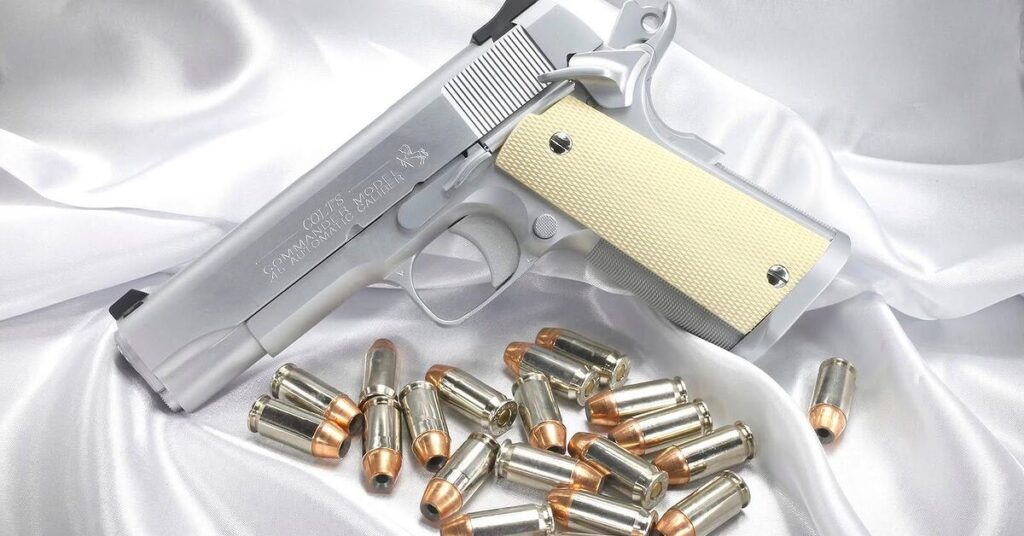
The Colt Combat Commander in this build captures a moment when 1911 design was still evolving toward the practical, squared-off ergonomics that would later dominate competition and carry guns. By pairing that vintage trigger guard with Stan Chen’s Gen 2 magwell and Harrison Design controls, the pistol bridges two eras without apology: the clean lines of early custom work remain intact while modern reliability features—EGW bushing, Derr Precision bobbed grip safety—eliminate the slop that once forced shooters to choose between beauty and function. The satin hard chrome finish is the quiet star here; unlike the mirror-bright plating that shouts for attention, this subdued sheen wears like a well-broken-in tool, reflecting light only when it needs to and hiding holster wear that would betray a flashier finish.
Natural holly grips complete the statement. In an age when builders reach for carbon fiber or stabilized wood to signal performance, the restrained warmth of holly feels almost subversive—an intentional nod that the gun exists for the hand, not the Instagram feed. Heinie rear and gold-line front sights keep the package practical, proving that even a retro aesthetic can deliver the speed and precision demanded by today’s defensive and competitive shooters. For the 2A community this pistol is more than nostalgia; it demonstrates that classic platforms can absorb contemporary upgrades without surrendering their identity, reinforcing the argument that the right to keep and bear arms includes the freedom to refine and personalize the tools of that right.
Such builds quietly expand the Overton window of what is considered “normal” carry gear. When a 1970s-inspired Commander can wear a magwell, modern controls, and a durable finish yet still look at home on a belt or in a nightstand, it undercuts the narrative that only polymer striker-fired pistols are practical. Collectors and competitors alike see that heritage firearms remain relevant precisely because they can be updated rather than replaced, preserving both mechanical legacy and the cultural continuity that makes the Second Amendment a living tradition rather than a museum piece.


