

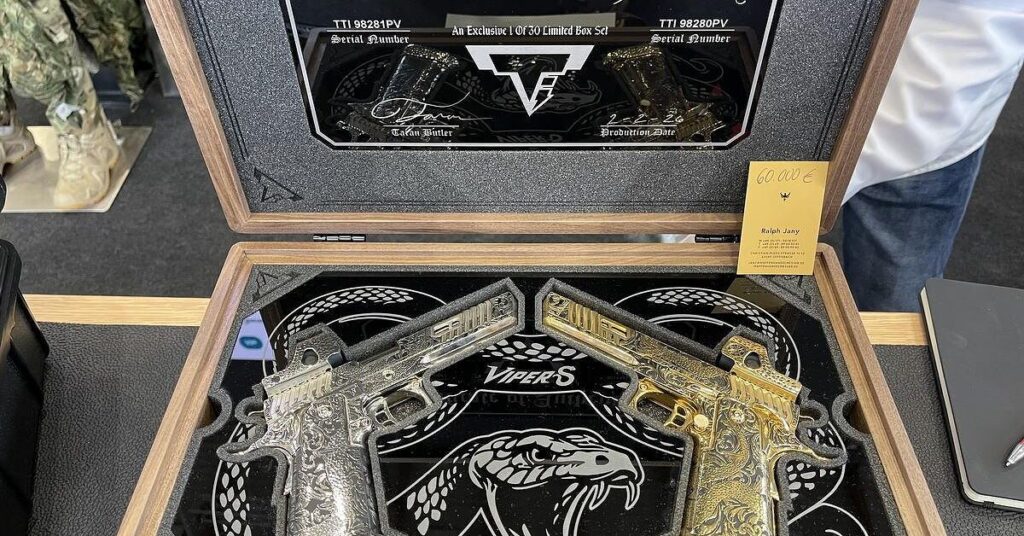
Taran Tactical’s decision to mint just thirty matched Viper sets—one pistol in mirror-polished silver, the other in high-luster gold—does more than create scarcity; it crystallizes the brand’s long-standing argument that firearms can be both working tools and heirloom-grade art. By placing the pair inside a single, custom-fitted case, TTI forces collectors to confront the idea that a defensive firearm need not be utilitarian monochrome; it can be a deliberate statement of personal taste without surrendering performance. The visual contrast also underscores a deeper truth in the 2A world: when government agencies and legacy manufacturers default to utilitarian black, private-sector innovators like TTI keep pushing the envelope on materials, finishes, and small-batch production that ultimately trickles down to every shooter who values both function and form.
For the broader firearms community, these thirty sets function as cultural signaling devices. Owning one instantly marks the collector as someone who has both the means and the inclination to support American small-batch manufacturing at its most exacting level. That support, in turn, sustains the ecosystem of aftermarket innovation—custom slides, match-grade barrels, and precision coatings—that keeps domestic gunmaking competitive against foreign imports. In an era when regulatory pressure often targets cosmetic features first, limited runs like this quietly demonstrate that beauty and reliability are not mutually exclusive, reinforcing the argument that the right to keep and bear arms includes the right to appreciate them as finely crafted objects rather than mere appliances.


