

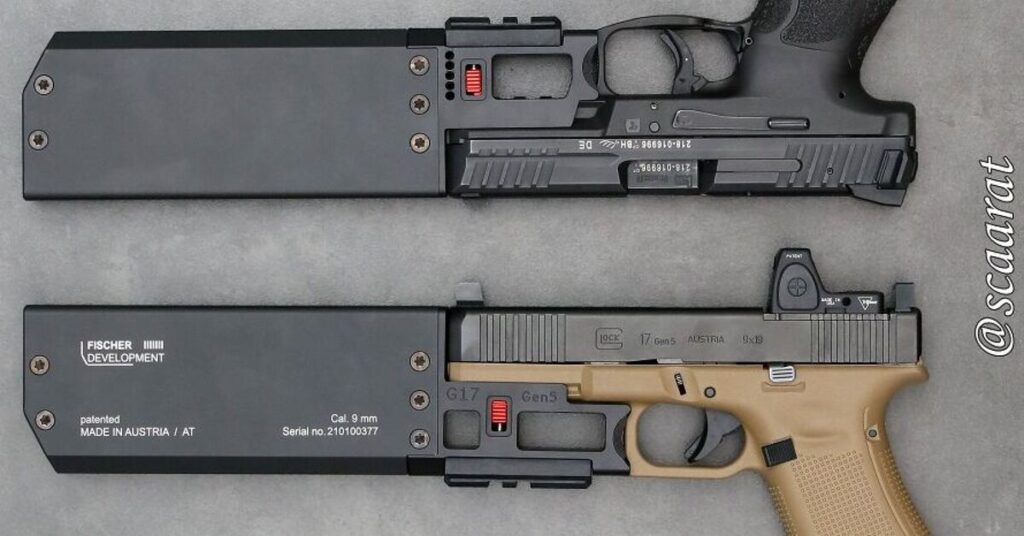
The FD-Silencer’s rail-mounted design is more than a clever engineering trick; it’s a direct challenge to the entrenched assumption that every pistol suppressor must live on the muzzle. By ditching threads entirely, Fischer Development removes the single biggest barrier that keeps most handgun owners from ever trying suppression—costly gunsmithing, permanent modifications, and the fear of voiding warranties. That “one-click” installation isn’t just convenient; it signals a future where suppressors behave more like optics or lights than permanent fixtures, letting shooters experiment without committing to irreversible changes on their firearms.
For the 2A community this matters because it lowers the practical cost of exercising a right that is already heavily regulated at the federal level. When a suppressor can travel from Glock to SIG to CZ without custom threading or new host guns, the economic friction that has long kept hearing protection out of reach shrinks dramatically. More importantly, the product reframes suppression as a normal safety accessory rather than an exotic modification, chipping away at the cultural narrative that treats sound reduction as inherently suspicious. If rail-mounted designs proliferate, we could see suppressors treated like any other rail accessory—common, removable, and ultimately less politically radioactive.
The deeper implication is that innovation at the mechanical level can outrun regulatory stagnation. While Congress debates HPA and states continue to play gatekeeper, companies like Fischer are simply designing around the friction. That doesn’t erase the NFA tax stamp or the waiting period, but it does demonstrate that the right to keep and bear arms is healthiest when the private sector keeps finding ways to make that right more usable in daily life. One-click suppression may not rewrite the law, but it quietly expands what millions of Americans can actually do with the firearms they already own.


