

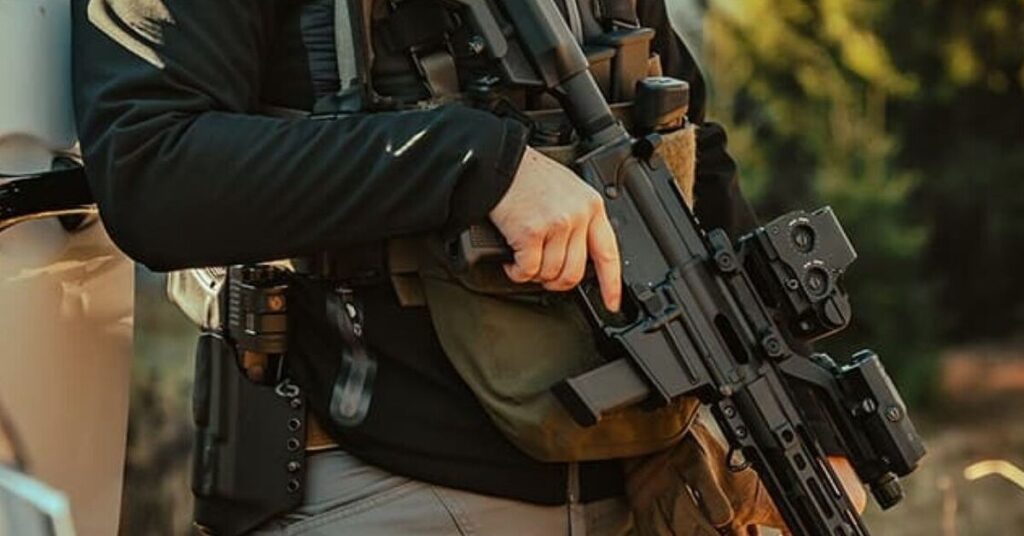
The Perun 9 arrives as a quiet rebuke to the notion that modern PCCs must chase optics-ready rails, folding stocks, and modular excess. Czech engineers at Perun Arms have instead leaned into the country’s long tradition of producing tools that simply work—think the CZ 75’s enduring ergonomics or the Bren’s no-nonsense reliability—by stripping the carbine down to a direct-blowback 9 mm receiver, a fixed stock, and a barrel that prioritizes controllability over marketing specs. The result is a carbine whose weight distribution and sight radius feel deliberately tuned for the shooter who values repeatable hits at 50–100 yards more than Instagram aesthetics. In an American market saturated with AR-pattern pistols and braced “firearms,” the Perun 9’s refusal to overcomplicate reads as both refreshing and pointed: sometimes the best feature is the absence of features that add cost without adding capability.
For the 2A community this matters because it underscores a broader truth about rights and regulation. When a foreign manufacturer can deliver a straightforward, magazine-fed carbine chambered in the most common pistol cartridge without needing to navigate the NFA’s brace or SBR thicket, it highlights how much of the current domestic design conversation is driven by compliance rather than performance. The Perun 9’s existence also quietly validates the post-2020 surge in PCC interest; as millions of new gun owners entered the ecosystem, many discovered that 9 mm carbines offer lower recoil, cheaper practice, and home-defense utility without the over-penetration concerns of rifle rounds. By refusing to chase the latest brace loophole or optics fad, Perun Arms is betting that a segment of that audience will eventually prioritize function over fashion—an implicit argument that the right to keep and bear arms is best exercised with tools chosen for effectiveness, not regulatory arbitrage.
Pragmatism like this also carries downstream implications for domestic manufacturers and legislators alike. If imported designs continue to demonstrate that reliability and controllability can be achieved without the feature creep that invites new restrictions, American companies may face pressure to simplify rather than complicate. At the same time, the Perun 9’s clean-sheet approach serves as a reminder that the Second Amendment’s strength ultimately rests on an informed citizenry willing to evaluate firearms on their merits instead of their marketing. In that sense the carbine is less a product launch than a case study: when rights are exercised with discipline and discernment, the market responds with tools that respect both the shooter and the principle.


