

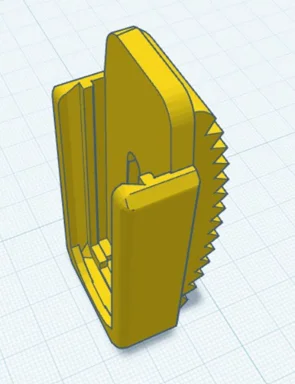
The ribbed baseplate for Gen M3 PMAGs is more than a simple 3D-printable accessory—it’s a quiet but powerful reminder that the tools of the trade are no longer locked behind corporate tooling or government-approved SKUs. By extending the functional life of 20-, 30-, and 40-round magazines with a part that can be printed at home, the design quietly erodes the artificial scarcity that has long defined the aftermarket. The fact that it works with the most ubiquitous AR-15 magazine platform means the community gains a low-cost, high-redundancy option that survives both supply-chain hiccups and future regulatory attempts to restrict magazine capacity or features.
What makes this release especially interesting is the deliberate engineering choices that speak to real-world use rather than theoretical perfection. The vertical print orientation, 100 % infill, and selective support strategy show an author who understands both the physics of polymer under recoil and the practical limitations of hobbyist printers. By flagging the need to de-select supports inside the lock-plate channel and to deburr the hole afterward, the designer is handing users a mini education in post-processing—skills that translate directly to other defense-related prints. That level of transparency turns a single file into a teaching tool, accelerating the broader diffusion of gunsmithing knowledge that has defined the 3D-printed firearms movement since the original Liberator file.
For the 2A community, the implications are straightforward: every openly shared, field-tested component reduces dependence on single points of failure—whether those are manufacturers, distributors, or legislators. A printable baseplate may seem trivial next to a complete receiver, but it normalizes the idea that magazines are user-serviceable hardware, not consumable accessories. Over time, that mindset compounds; once shooters treat magazines as modular systems they can repair or upgrade at will, the practical effect of magazine bans or feature restrictions shrinks. In short, this small ribbed plate is another brick in the wall of distributed manufacturing that keeps the right to keep and bear arms functionally, not just theoretically, intact.


