

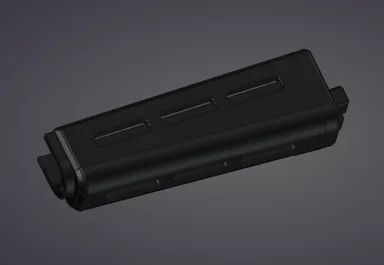
Patricia’s AKM handguard is a textbook example of how the 2A community turns a single, modest idea into a quiet revolution in aftermarket support. By taking the VSKA’s factory furniture as a starting point and then thickening the walls, tightening the fit, and threading three M-LOK slots on each side, the designer has solved the two problems that have dogged budget AKs for years: flex under torque and the inability to mount modern accessories without drilling or adapters. The result is a part that feels like an OEM upgrade rather than an afterthought, yet it carries a Creative Commons license that invites anyone with a printer to reproduce and iterate on it. That combination of pragmatism and open-source ethos is exactly why the grassroots firearms ecosystem keeps outpacing legacy manufacturers.
What makes the release noteworthy is the way it quietly reframes the conversation around “compliance” versus “customization.” Instead of forcing users into a binary choice between a mil-spec look and a featureless rifle, Patricia’s design gives builders three M-LOK nodes per side without touching the receiver or trigger group. That means states with feature bans can still add lights, grips, or bipods while remaining within the letter of the law—an elegant workaround that legislators never anticipated. At the same time, the CC-BY-SA-NC license ensures the file cannot be locked behind a paywall or turned into proprietary hardware, preserving the right to repair and modify that sits at the heart of the Second Amendment’s practical exercise.
For the broader community, this handguard is a reminder that incremental, user-driven innovation often delivers more freedom than flashy factory roll-outs. A single, printable part now bridges the gap between a century-old battle rifle and twenty-first-century modularity, and it does so without requiring a single FFL transfer or government permission slip. In an era when regulators keep trying to redraw the line between “accessory” and “firearm,” designs like this one keep pushing that line back in favor of the individual builder.


