

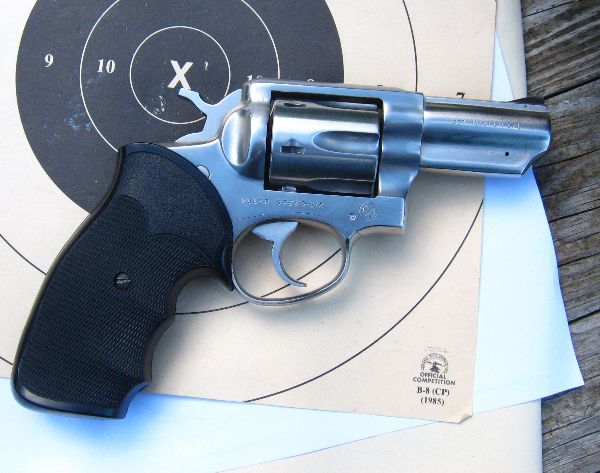
The Ruger Speed-Six’s quiet retirement marks more than the end of a single model line; it’s the closing of a chapter in American revolver design that once defined what a duty-grade wheelgun could be. Introduced in the mid-1970s as a compact, fixed-sight .357 Magnum built on a medium frame, the Speed-Six offered law-enforcement agencies and civilian carriers a balance of power, reliability, and concealability that few revolvers have matched since. Its stainless-steel construction and smooth double-action trigger made it a favorite among officers who needed a sidearm that could survive daily abuse without constant maintenance, and its discontinuation quietly signals how far the market has drifted toward polymer-framed striker pistols that prioritize capacity over the mechanical elegance of a well-tuned revolver.
For the 2A community, the Speed-Six’s passing is a reminder that rights exercised are rights preserved. While modern semi-autos dominate carry and competition circles, the revolver remains the simplest expression of the right to keep and bear arms—no magazines to lose, no electronics to fail, just six rounds of controlled power that have served generations of Americans. Collectors and shooters who still value that mechanical honesty are already seeing secondary-market prices climb, and the model’s exit from production underscores how fragile certain configurations can become when regulatory pressure, corporate priorities, and shifting consumer tastes converge. In an era when some states treat magazine capacity and feature lists as political battlegrounds, the Speed-Six stands as proof that even “old-tech” firearms can become scarce if manufacturers decide they’re no longer worth the regulatory or liability risk.
The real implication is cultural as much as practical: every time a proven, no-frills defensive tool disappears from the catalog, it narrows the menu of choices available to law-abiding citizens. The Speed-Six didn’t need a red-dot, a rail, or a 17-round magazine to earn its reputation; it simply worked, decade after decade, in holsters across patrol cars and nightstands alike. Its departure should prompt 2A advocates to keep asking why fewer manufacturers are willing to produce such straightforward, effective firearms—and to defend the legal and market conditions that allow small, independent producers to fill the gaps left by larger companies chasing the next polymer wonder. In short, the Speed-Six may be gone, but the principle it embodied—simple tools for free people—remains very much worth protecting.


