

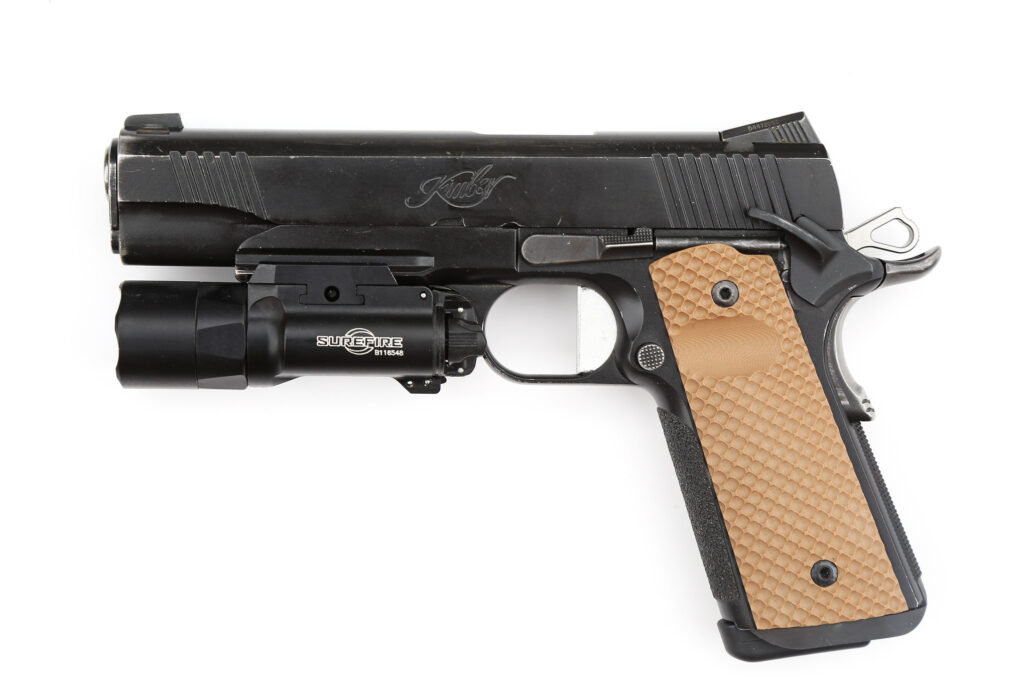
The 1911 remains one of the most enduring platforms in American firearms culture, and this piece shows why it still earns a place on a duty belt even in an era dominated by polymer-framed striker guns. By focusing on practical upgrades—sights, trigger work, and reliability tweaks—the article demonstrates that “old iron” can be tuned into a modern workhorse without sacrificing the mechanical simplicity and shootability that made John Browning’s design legendary. For the 2A community, this matters because it reinforces the principle that rights are exercised through competence; a well-maintained, personally optimized 1911 is both a statement of heritage and a functional tool that meets contemporary defensive standards.
What stands out is the emphasis on duty-grade reliability rather than competition flair. The author’s choices—night sights, a crisp trigger, and careful attention to feeding and extraction—translate directly to the everyday carry decisions millions of citizens make. In an environment where some jurisdictions still treat the 1911 as an anachronism, stories like this push back against the narrative that only the newest polymer pistols are “serious” defensive arms. They also highlight how individual craftsmanship and aftermarket support keep classic designs viable, preserving choice in a market increasingly shaped by regulatory pressure and corporate consolidation.
Ultimately, optimizing a duty-use 1911 is less about nostalgia and more about affirming that the Second Amendment protects effective arms, not just fashionable ones. When citizens take the time to refine a 110-year-old platform for modern threats, they exercise both their right to keep and bear arms and their responsibility to do so competently. That combination of tradition, technical skill, and unapologetic self-reliance is exactly the cultural posture the 2A community needs to project if it hopes to maintain relevance in the decades ahead.


