

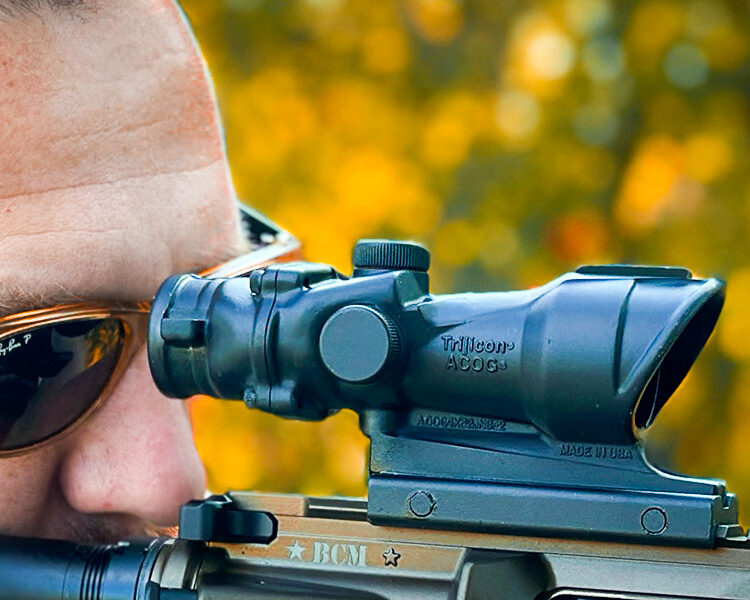
The Trijicon ACOG’s refusal to rely on batteries isn’t just a design quirk—it’s a philosophical statement about what a fighting optic should be. In an era where red dots and LPVOs demand constant power management and firmware updates, the ACOG’s tritium-and-fiber-optic illumination system keeps the reticle alive whether you’re in a dusty patrol vehicle at noon or clearing a basement at 0300. That independence from electronics translates directly into fewer points of failure when seconds count, a reality that resonates with anyone who’s ever watched a modern optic go dark mid-drill or, worse, mid-fight. The fixed 4× magnification may seem quaint next to today’s variable scopes, but its eye-box forgiveness and bullet-drop-compensating reticle still deliver first-round hits at realistic defensive distances faster than many shooters can dial a turret.
For the broader Second Amendment community, the ACOG’s continued relevance is a quiet rebuke to the notion that newer is always better or that civilian rifle setups must mirror military refresh cycles. Its legendary bombproofing—forged 7075-T6 housing, waterproof to 500 feet, proven in every climate from Arctic patrols to desert convoys—means a single optic can outlast multiple rifles and multiple owners. That longevity undercuts the throw-away culture of planned obsolescence that creeps into some corners of the optics market, reinforcing the idea that a well-made tool is itself an act of preparedness. When legislators eye restrictions on “military-style” accessories, the ACOG stands as a reminder that rugged, battle-proven glass isn’t exotic hardware; it’s the baseline for citizens who take marksmanship and self-reliance seriously.


