

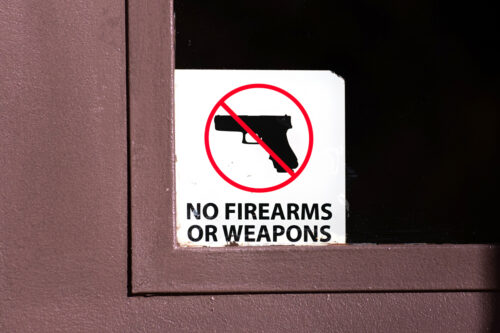
Ohio’s State Fair has quietly drawn a line in the sawdust: the midway stays open to lawful carry, but the moment a visitor steps into a barn, food hall, or concert venue, the Second Amendment apparently evaporates. That distinction is not merely inconvenient; it is constitutionally incoherent. The state already recognizes that fairgoers pose no special danger when they stroll past the Ferris wheel with a holstered pistol, yet it insists the same individuals become presumptive threats the instant they cross a threshold. If the government’s own data show no uptick in firearm crime at the fair, the building-by-building ban collapses into the kind of ad-hoc restriction the Supreme Court rejected in Bruen—interest-balancing masquerading as public safety.
Worse, the policy hands criminals a legible map. Law-abiding attendees must either leave their defensive tools baking in a parking-lot oven or forgo the livestock exhibits, the butter sculptures, and the evening concerts entirely. Meanwhile, anyone bent on mayhem can simply wait for the crowds to funnel into the very structures now declared gun-free. The fair’s piecemeal rule therefore does not reduce risk; it concentrates it, converting every doorway into a potential soft target while honest citizens shuffle back and forth to their vehicles like parolees checking in.
For the broader 2A community, the episode is a live-fire demonstration of post-Bruen realities: shall-issue permitting and constitutional carry are necessary but not sufficient when state actors still possess the bureaucratic creativity to carve “sensitive places” out of an otherwise public event. Ohio’s fairgoers now have standing to demand either uniform access or a genuine, evidence-based justification—something more rigorous than “we feel safer if your gun waits in the car.” Until that justification appears, the fair’s building ban remains exactly what it looks like: an arbitrary disarmament zone that fails every constitutional test the Supreme Court has articulated.


