

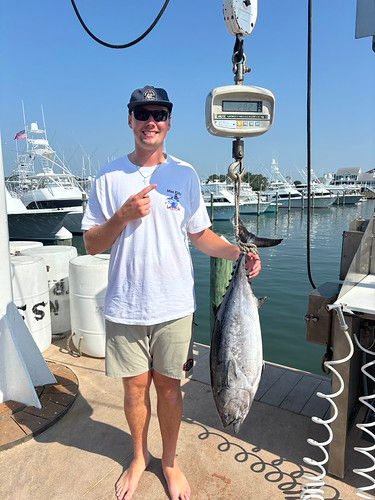
Cooper Clark’s 28.2-pound false albacore, hauled in just off Ocean City on July 3, 2026, isn’t merely another line in the Maryland DNR record book—it’s a vivid reminder that the same skills and gear that put fish on the deck also keep citizens ready to defend life and liberty. The fact that this Atlantic Division mark has now fallen three times in a single year tells us the offshore bite is hotter than ever, and the anglers chasing those fish are dialing in precision casting, knot strength, and split-second decision-making that translate directly to the range and the field. When a recreational angler like Clark can push the limits of what a spinning outfit can handle, it underscores why the Second Amendment community continues to fight for access to the very tools—high-quality optics, durable reels, and reliable terminal tackle—that double as training platforms for marksmanship and situational awareness.
Beyond the numbers, the story highlights how private citizens, not government hatcheries or stocked put-and-take programs, are the ones discovering and documenting these new benchmarks. Clark’s catch was verified by a state biologist, yet the rod, reel, line, and lure that made it possible came from the free market, not a permit office. That independence mirrors the broader 2A argument: when law-abiding Americans retain the right to own and master advanced equipment, they generate real-world data, refine techniques, and pass knowledge to the next generation far more efficiently than any top-down regulatory scheme. In an era when coastal states keep flirting with further restrictions on both fishing tackle and firearms, Clark’s record stands as living proof that an armed and skilled populace—whether the “arms” are a .308 or a 30-pound spinning setup—continues to expand the frontier of what’s possible.
For the 2A community, the takeaway is straightforward: every trip offshore is range time in disguise. The same hands that set drag, read current, and fight a 28-pound speedster are the hands that will one day protect the boat, the family, or the community if seconds count. Supporting access to both the water and the hardware that makes these feats possible isn’t just about bigger fish; it’s about preserving the self-reliant culture that has always been the backbone of American liberty.


