

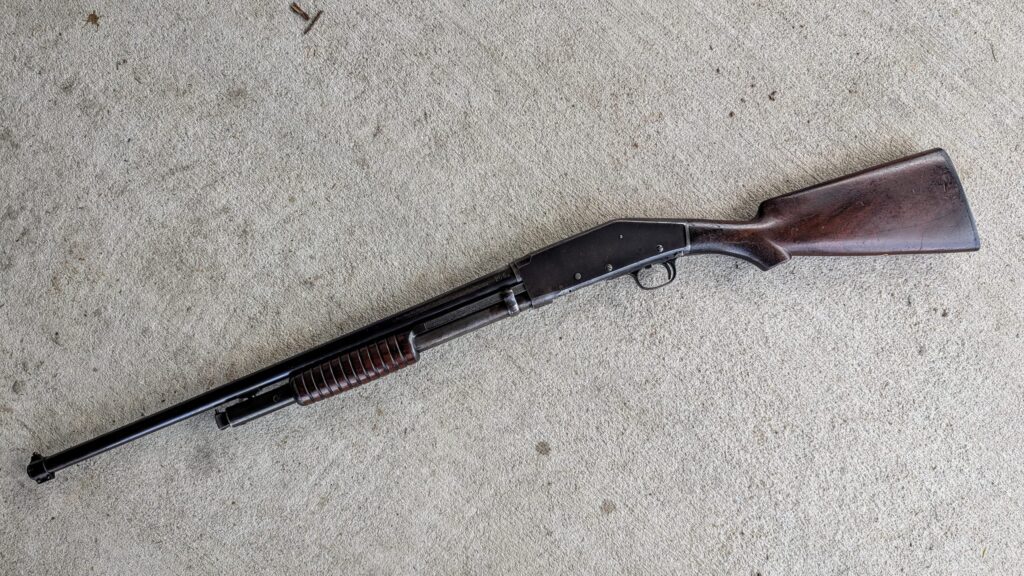
The Marlin Model 44 occupies a curious niche in American firearms history: a 20-gauge pump-action shotgun that never achieved the widespread recognition of its lever-action rifle siblings yet embodies the same no-nonsense, user-focused engineering that once defined the Marlin brand. Built during an era when pump shotguns were still evolving from simple utility tools into refined sporting arms, the Model 44 offered shooters a compact, reliable repeater chambered in the lighter-recoiling 20-gauge—ideal for upland game, small-game hunting, and even home defense in an age before specialized defensive shotguns became commonplace. Its relatively obscure status today stems partly from limited production runs and Marlin’s heavier emphasis on its iconic lever guns, but that scarcity only enhances its appeal to collectors who value functional oddities over mass-market staples.
For the 2A community, the Model 44 serves as a tangible reminder that innovation in firearms design has often come from smaller, independent manufacturers willing to experiment with niche calibers and configurations rather than chasing universal popularity. In an era of increasing regulatory pressure and corporate consolidation within the firearms industry, obscure models like this underscore the importance of preserving manufacturing diversity and historical context; they demonstrate how yesterday’s “oddball” guns frequently inform today’s defensive and sporting choices. Enthusiasts who seek out these pieces aren’t merely collecting hardware—they’re safeguarding institutional knowledge about what works in real-world conditions, knowledge that remains vital as new restrictions threaten to narrow the range of legal options available to lawful gun owners.


