

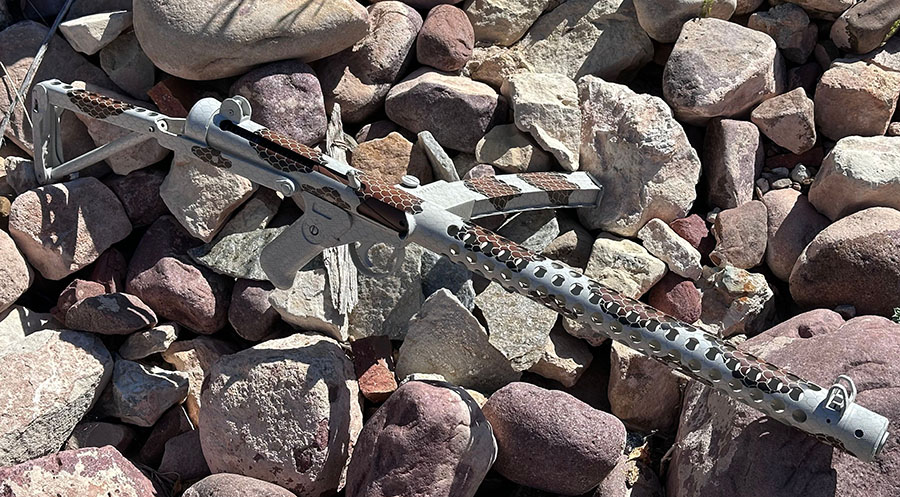
The Southern Viper Sterling Type II isn’t just another .22 LR plinker dressed up for the woods; it’s a deliberate re-imagining of the storied British submachine gun that once armed paratroopers and police units across the Commonwealth. By marrying the Sterling’s roller-delayed blowback action to a compact, DuraCoated receiver and a purpose-built “snake-gun” configuration, the builder has created a lightweight, corrosion-proof tool that thrives where traditional blued steel would surrender to humidity and mud. That finish isn’t merely cosmetic; it signals a shift in how modern 2A enthusiasts view legacy designs—not as museum pieces, but as living platforms that can be updated without surrendering their mechanical DNA.
For the broader firearms community, this kind of project underscores a quiet but powerful truth: the right to keep and bear arms is exercised as much in the workshop as it is at the ballot box. When small-batch builders take a Cold-War-era receiver, coat it in modern ceramics, and re-purpose it for everyday carry or ranch defense, they’re exercising the same ingenuity that kept civilian arms development ahead of bureaucratic inertia for generations. The result is a gun that looks at home slung beside a tractor or tucked behind the seat of a pickup, yet still carries the unmistakable silhouette of a design once vetted by armies and insurgencies alike.
What makes the Viper noteworthy isn’t raw firepower—its .22 LR chambering keeps it firmly in the “fun gun” category—but the statement it makes about adaptability. In an era when regulators eye even rimfire platforms with suspicion, the ability to take an existing, battle-proven action and evolve it into something new and distinctly American is itself an act of cultural preservation. The DuraCoated Sterling reminds us that the Second Amendment isn’t static; it’s a living license to innovate, customize, and ensure that yesterday’s tools remain relevant to tomorrow’s challenges.


