

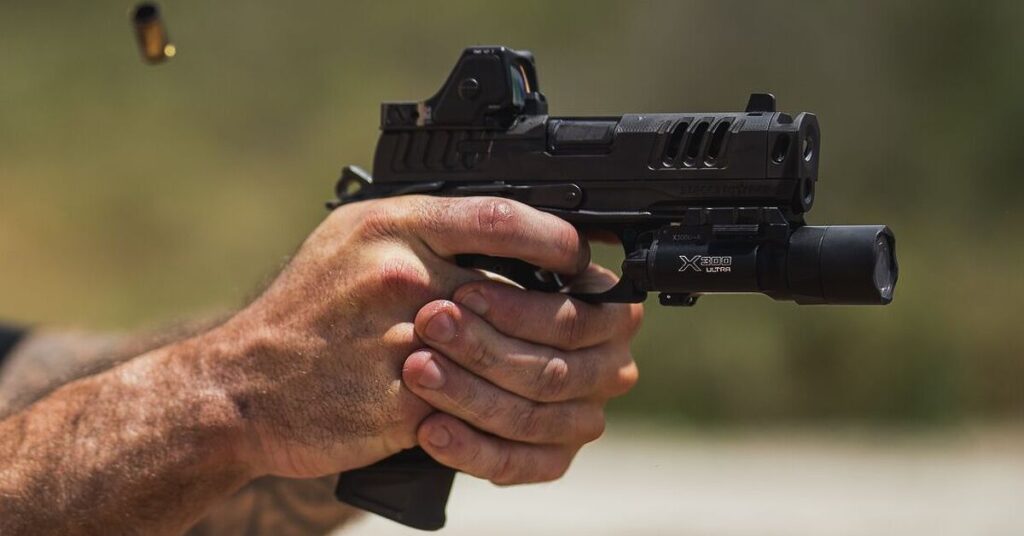
Staccato’s decision to stretch the compensated C4X platform into the full-size, steel-framed HD P4X is more than a simple size upgrade; it’s a calculated bet that the same recoil-taming technology that made the compact model a concealed-carry darling can also dominate the duty and competition benches. By swapping aluminum for steel and lengthening the grip, the company is giving agencies and serious shooters a 4-inch, optics-ready pistol that stays flat during rapid fire without the need for a suppressor or bulky aftermarket comp. That matters in an era when red-dot pistols are becoming standard issue and qualification courses keep adding head-box drills at speed—less muzzle flip means faster follow-ups and tighter groups under stress, exactly the metrics that matter when seconds count.
For the broader 2A community the move signals that the compensated-pistol trend has legs beyond the micro-compact niche. Where once only competition shooters chased after ports and dual-spring recoil systems, now everyday carriers and off-duty cops can choose a factory gun that delivers race-gun performance in a duty package. The HD P4X also underscores how private-sector innovation continues to outpace bureaucratic procurement cycles; while some agencies are still issuing 1990s-era double-stacks, Staccato is already shipping optics-ready, compensated pistols with 20-round magazines and 1911-style triggers. That gap between what civilians and professionals can actually buy and what government buyers eventually adopt keeps widening, reinforcing the argument that the right to keep and bear arms includes access to the most effective modern tools rather than bureaucratic leftovers.
At the same time, the HD P4X’s arrival highlights an ongoing tension within gun culture itself: the same features that make the pistol gentler to shoot also invite new regulatory scrutiny. As more states flirt with “assault-weapon” language that could someday touch threaded barrels or optics cuts, a factory-compensated duty gun becomes both a capability milestone and a reminder that our rights must be actively defended in legislatures as well as at the range. Staccato’s steel-frame evolution shows the market rewarding companies that listen to end users, but it also places the onus on 2A advocates to ensure tomorrow’s innovations aren’t strangled by tomorrow’s statutes.


