

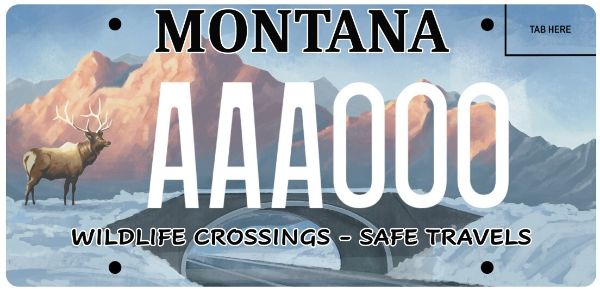
Montana’s new wildlife-crossing license plate is a textbook example of how states can raise dedicated revenue for infrastructure without reaching into anyone’s pocket or creating new restrictions. By letting drivers voluntarily kick in twenty dollars at renewal time, the program channels private choice into safer highways for both animals and motorists—an approach that aligns neatly with the Second Amendment community’s long-standing preference for market-driven solutions over top-down mandates. The artwork itself, created by a local high-school graduate, adds a distinctly Montana flavor that celebrates self-reliance and community involvement rather than bureaucratic uniformity.
For gun owners who spend weekends in the backcountry, the practical payoff is obvious: fewer deer, elk, and moose on the pavement means fewer sudden stops, fewer damaged vehicles, and fewer situations where a hunter might feel compelled to draw a sidearm for an injured animal on a busy roadway. More broadly, the plate demonstrates that conservation funding can be generated through enthusiasm instead of taxation or regulatory pressure—the same principle that has kept public ranges and hunting access viable in many Western states. When citizens see their own dollars visibly improving habitat connectivity, support for broader access to public lands tends to rise, reinforcing the cultural and legal space in which responsible firearm ownership thrives.
Ultimately, the program quietly undercuts the narrative that environmental protection and individual liberty are locked in opposition. By tying revenue directly to consumer choice and keeping the dollars earmarked for a single, measurable purpose, Montana is modeling a lightweight, transparent mechanism that other states could copy without expanding government reach. For the 2A community, that’s worth noticing: every time a policy solves a real problem through voluntary participation instead of compulsion, it strengthens the precedent that liberty and stewardship can advance together.


