

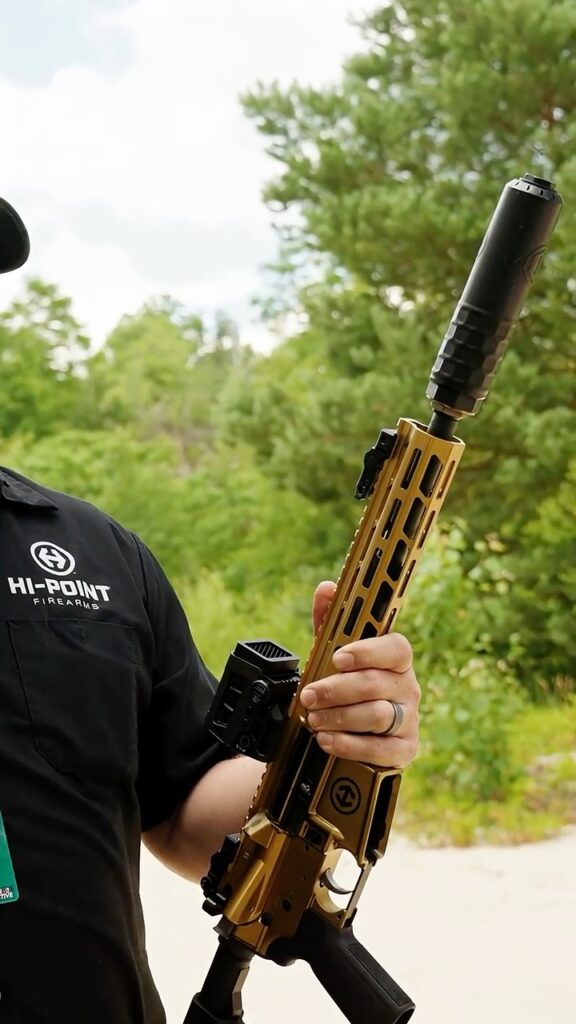
Hi-Point’s surprise drop of the 30Ti suppressor at GunCon 2026 isn’t just another can on the rack—it’s a deliberate shot across the bow of the “budget equals junk” narrative that has long dogged the company. By pairing their famously affordable pistol-caliber carbines with a titanium suppressor that reportedly tips the scales under seven ounces, Hi-Point is forcing the market to confront the idea that effective sound reduction no longer has to cost more than the host firearm. That single move reframes the entire conversation around accessibility: if a $200 carbine can now wear a sub-$500 can and still deliver hearing-safe performance, the old gatekeeping around “serious” suppressors starts to look more like marketing than engineering reality.
For the broader 2A community the implications run deeper than price tags. Every new manufacturer that cracks the suppressor space chips away at the regulatory mystique that has kept the NFA tax stamp regime comfortably insulated from mass-market pressure. When a brand whose customer base skews working-class and first-time buyers starts shipping integrally suppressed options or easy-to-mount Ti cans, it expands the constituency that has skin in the fight against the Hughes Amendment and the $200 tax. That demographic shift matters more than any single decibel rating; it turns silencers from niche hobby gear into everyday safety equipment that millions of voters might actually use and defend.
The timing at GunCon 2026 also signals that Hi-Point sees political and cultural tailwinds worth betting on. With several states already chipping away at suppressor restrictions and the national conversation around hearing protection gaining traction, the company is positioning itself not merely as a value player but as a volume player in the post-2020 rights expansion. If the 30Ti delivers on reliability and the aftermarket follows with mounts and wipes, the brand could accelerate the normalization of suppressed shooting the same way its carbines normalized affordable semi-auto PCCs. In short, this isn’t just a new product—it’s a market signal that the suppressor fight is moving from the gun shop counter to the checkout line.


