

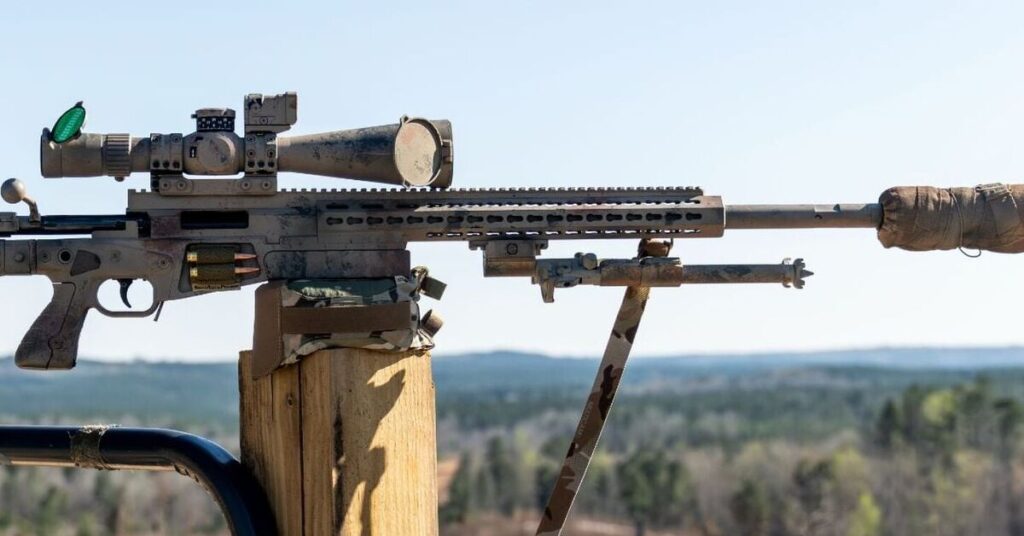
The new Edgar Sherman Design NOTCH bag arrives at a moment when precision rifle culture is pushing hard against the old assumption that a good rear bag is just a sand-filled rectangle with a grippy cover. What makes the NOTCH interesting isn’t another incremental tweak to fill height or fabric texture; it’s the deliberate decision to treat the bag as an active interface between shooter, rifle, and terrain rather than a passive lump of media. By rethinking how the bag conforms under recoil and how its contact patch can be tuned on the fly, ESD is signaling that the next competitive edge may come from micro-adjustments that happen in fractions of a second rather than from simply adding more weight or a fancier outer shell.
For the broader 2A community this matters because it reframes the conversation around what “practical” gear actually means when the legal and cultural environment keeps tightening. A bag that genuinely improves positional stability without requiring a larger footprint or more conspicuous kit gives shooters another tool to stay inside the lines while still extracting maximum performance from their rifles. That kind of incremental, lawful innovation keeps the focus on marksmanship fundamentals instead of optics or chassis that can trigger regulatory scrutiny, and it quietly reinforces the argument that responsible gun owners are constantly iterating on safety and accuracy rather than standing still.
Longer term, the NOTCH’s reception will test whether the precision community is willing to pay for genuine mechanical improvement or whether it will default to the familiar names that have dominated rear-bag sales for a decade. If the design holds up under real stages and field conditions, it could accelerate a small wave of specialized bags that treat the interface between gun and ground as a solvable engineering problem instead of a solved one. That shift matters because every time a new domestic manufacturer demonstrates that American innovation still moves the needle on practical accuracy, it undercuts the narrative that further restrictions are needed to address some supposed stagnation in civilian firearms technology.


