

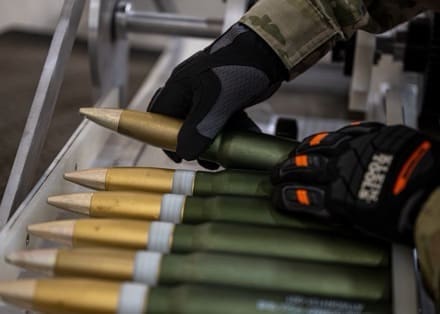
The Air Force’s new 30 mm linking machine at Hurlburt Field isn’t just a logistics fix—it’s a textbook example of how government waste can be clawed back when someone actually thinks like a civilian reloader instead of a bureaucrat. By taking surplus A-10 Thunderbolt rounds that would otherwise sit in climate-controlled warehouses until they’re scrapped, the service is feeding them straight into AC-130J Ghostriders that still need every bit of that 30 mm punch. The machine itself is essentially a high-speed, military-grade version of the progressive presses many of us run in our garages; the only difference is the scale and the fact that taxpayers were about to eat the cost of millions of perfectly good cartridges. For the 2A community this is a quiet but important reminder that the same “linked-belt” technology that keeps gunships in the fight is the direct descendant of the belt-fed systems civilians still lawfully own and train with—proof that the mechanical principles we defend aren’t relics; they’re still solving real problems in 2026.
More broadly, the move exposes how fragile the military’s ammunition pipeline can be when platforms are retired faster than the ammo they were designed around. Instead of letting political timelines dictate that hundreds of thousands of 30 mm rounds get written off, the 1st Special Operations Wing is treating surplus as an asset class rather than a disposal problem. That mindset mirrors what pro-2A reloaders have argued for decades: once a cartridge is made, its utility shouldn’t be dictated by the original platform’s retirement date. If the Air Force can justify keeping these rounds in circulation, it undercuts the recurring narrative that certain calibers or weapon systems are “obsolete” simply because a new program office wants a bigger budget line. The linking machine therefore becomes more than hardware; it’s evidence that conservation and innovation can coexist even inside the Pentagon, and that the same logic applies on the civilian side when we resist arbitrary restrictions on common ammunition types.
Finally, the story quietly validates the long-term value of belt-fed systems themselves. While anti-gunners continue to push the idea that civilian ownership of linked ammunition or semi-auto versions of military machine guns is somehow dangerous or unnecessary, the Air Force is doubling down on exactly those architectures for close-air support. The AC-130J’s GAU-23 30 mm gun and the A-10’s GAU-8 Avenger both rely on the same reliable, high-capacity feeding method that civilian competitors and historical collectors have preserved. By investing in the infrastructure to keep that ammo flowing, the service is inadvertently making the case that these designs remain relevant, effective, and worth maintaining—arguments the 2A community has been advancing since the 1986 machine-gun freeze. In short, the linking machine isn’t just saving millions of dollars; it’s preserving institutional knowledge and mechanical heritage that directly parallels the rights we fight to keep at home.


