

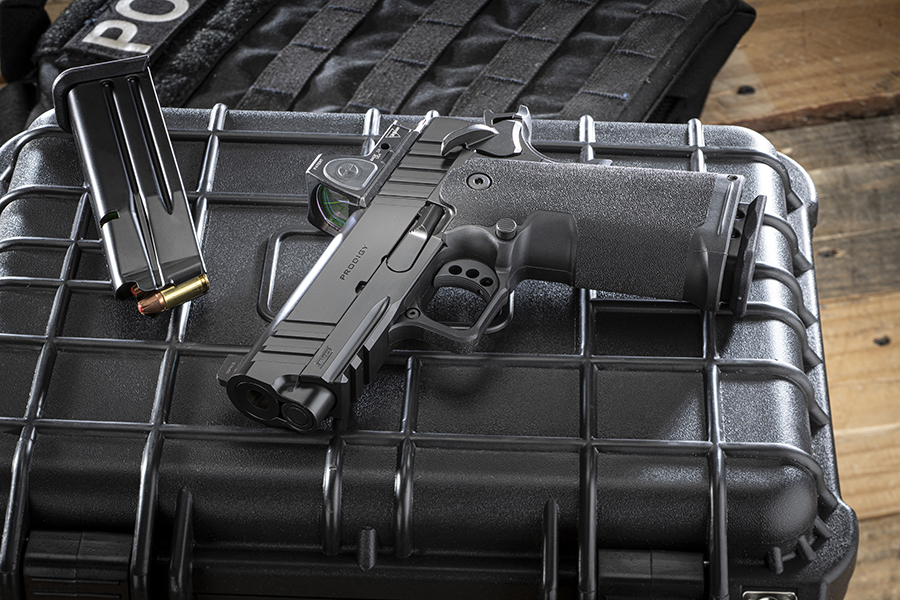
Springfield’s new 3.5-inch DS Prodigy AOS with a full-size grip is the latest proof that the 1911 platform refuses to be frozen in time. By marrying a compact slide to the magazine capacity and ergonomics of a Government-size frame, the company has created a pistol that finally answers the question “Why can’t I have both?” for shooters who want 1911 trigger feel and shootability without sacrificing the round count that modern defensive doctrine demands. The optics-ready AOS plate system further signals that even classic 1911 geometry can play nicely with today’s red-dot ecosystem, removing one more excuse for traditionalists to stay in the irons-only past.
For the 2A community, this release is more than a niche SKU; it’s a market signal that double-stack 1911s are no longer fringe experiments—they’re becoming mainstream carry options. When a major manufacturer like Springfield invests tooling and marketing dollars in a shorter-barreled, higher-capacity 1911, it validates the years of aftermarket experimentation that began with the original Para-Ordnance frames in the 1990s. The result is a feedback loop: increased production volumes drive down prices, which in turn broadens the pool of owners who can argue, with both data and lived experience, that 1911 ergonomics and shootability are not incompatible with the realities of 21st-century self-defense.
Critics will note that the 3.5-inch barrel trades some velocity and sight radius for concealability, yet the full-size grip keeps recoil impulse tame and allows positive, consistent hand placement—advantages that matter more in a defensive encounter than marginal ballistic numbers. In an era when capacity restrictions and “assault weapon” rhetoric dominate legislative debates, a higher-capacity 1911 variant also serves as a living rebuttal: it demonstrates that America’s most enduring handgun platform can evolve without government prompting. The DS Prodigy’s arrival therefore isn’t just product news; it’s tangible evidence that the right to keep and bear arms continues to be exercised through innovation, not despite it.


