

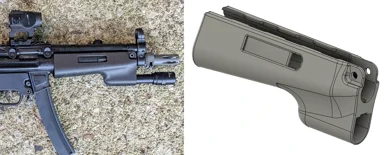
The MP5 Scout Light Forend is a clever nod to the classic Surefire integration that once defined high-end subgun builds, but this time it’s born from a printer bed instead of a machine shop. By tucking the light inside the forend and routing the tape switch through a side port, the design keeps the weapon’s profile clean while still delivering the low-light capability that made the original Surefire forends legendary. The lowered light position is more than cosmetic; it leaves clearance for suppressors, acknowledging that today’s MP5 users often run cans and need every millimeter of rail space to remain functional.
What makes this release especially interesting is the material and mechanical thinking behind it. Recommending PA6-CF or similar high-heat, semi-flexible filaments shows an understanding that a forend isn’t just furniture—it’s a stressed interface between handguard, cocking tube, and optic rail. The call for just enough flex to grip the tube without cracking is a practical concession to real-world tolerances that injection-molded parts rarely have to address. In a market where polymer accessories are often either rock-hard or flexy to the point of uselessness, this strikes a thoughtful middle ground.
For the 2A community, the project is another data point in the quiet revolution of user-designed, user-produced firearm furniture. It demonstrates that small-batch, highly specific accessories no longer require a defense-contractor contract or a six-figure tooling run; they require an FDM printer, some decent filament, and a willingness to iterate. As more builders adopt these tools, the line between “factory” and “custom” continues to blur, giving individuals greater control over how their firearms are configured and, by extension, how they exercise their rights.


