

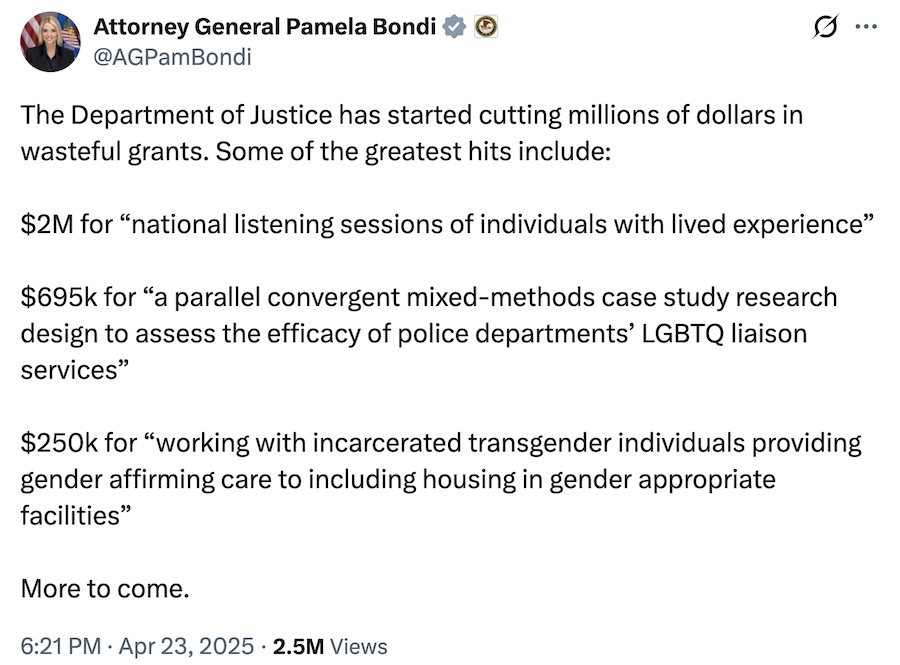
Imagine the DOJ handing out billions in grants to fund everything from community policing to violence intervention programs, only to slash that pot by $850 million—a whopping 15% cut—in their FY2026 budget proposal. That’s not just a line-item trim; it’s a signal flare from an administration that’s spent years funneling cash into anti-crime initiatives credited with modest drops in urban violence. Critics are wailing that this jeopardizes progress, but let’s peel back the layers: these grants often bankroll progressive pet projects like focused deterrence and Cure Violence models, which sound noble but frequently sideline root causes like unchecked illegal gun flows from lax enforcement. In reality, violent crime rates have been trending down since their 2020-2022 spike, per FBI data, without needing every last dime of federal largesse—coincidentally aligning with post-pandemic reopenings and bolstered local policing.
For the 2A community, this is less a crisis and more a covert win. These DOJ pots, including Byrne JAG and COPS funding, have increasingly been weaponized to pressure states into red-flag laws, universal background checks, and other encroachments on lawful gun ownership—remember how Biden’s 2022 budget spiked grants to $15 billion with strings attached for gun violence prevention? A leaner budget means fewer carrots (and sticks) for anti-2A mandates, potentially freeing up states to prioritize actual crime-fighting over feel-good registries. Sure, alarmists claim it’ll spike murders, but history shows federal grant dependency breeds inefficiency; cities like NYC and Chicago cut crime hardest through targeted enforcement, not endless Washington handouts. If anything, this forces a reckoning: real progress comes from empowering cops and respecting armed self-defense, not bloating bureaucracies.
The implications ripple wide—expect blue-city mayors to cry foul and demand bailouts, while red states cheer the fiscal restraint and double down on pro-2A reforms. This cut isn’t sabotaging safety; it’s starving the beast that conflates legal carriers with criminals. 2A advocates should watch closely: as funds dry up, the true drivers of crime reduction—strong borders, swift prosecutions, and constitutional carry—get a brighter spotlight. Stay vigilant; this modest trim could be the first crack in the overfunded edifice of gun-control grift.


