

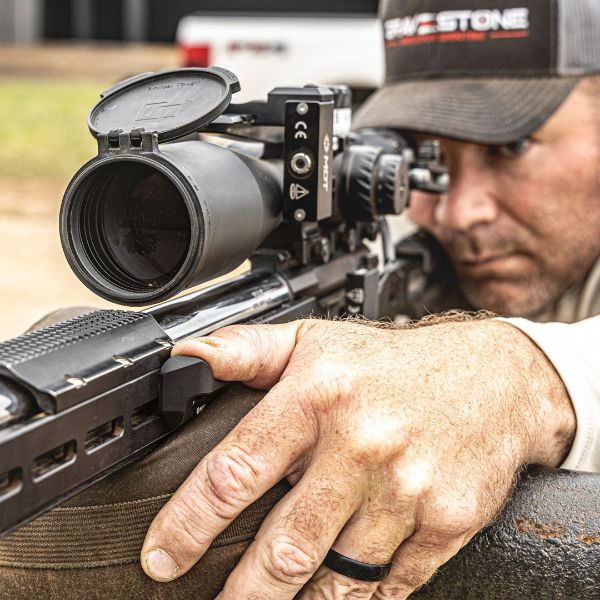
In the relentless pursuit of sub-MOA consistency under time pressure, MDT’s new Rifle Control Points thumbshelves represent more than another aluminum doodad—they’re a direct response to how positional stages have evolved. Where once a shooter’s support hand floated on a barricade or bag with only muscle memory as a reference, these M-Lok-mounted shelves lock the thumb into a repeatable V-hull cradle that tracks recoil straight back instead of letting the rifle torque off-axis. The textured surface that stays grippy when sweat or rain turns a carbon handguard into a slip-n-slide is a small detail with outsized effect on cold-bore/first-shot confidence when stages start at 400-plus yards and the clock is already running.
For the 2A community this matters because every incremental gain in practical accuracy without relying on government-approved training pipelines or restricted gear reinforces the argument that private citizens can and do master the same skill sets once reserved for professionals. Competitors who cut their teeth on NRL and PRS stages are quietly building a bench of data—shot-after-shot repeatability, positional transitions, adverse-weather performance—that directly translates to defensive or hunting scenarios where missing the first shot isn’t an option. MDT isn’t selling a gadget; they’re codifying the hard-won lessons of a sport that treats the rifle as an extension of the shooter rather than a government-issue appliance, and that ethos keeps civilian marksmanship sharp even as regulatory pressure tries to dull it.


